CoSE

Gilead alumni panel opens doors for future biotech leaders

By sharing how mentorship, research and opportunity at SFSU helped launch their own paths, these alumni offered students a powerful look at what’s possible in science, while reflecting Gilead’s broader investment in SFSU through philanthropy and mentorship

San Francisco State University (SFSU) science students received an insider’s view of what it’s like to work at one of the world’s leading biopharma companies last fall with a lab tour and panel discussion featuring SFSU alumni working at Gilead Sciences. The event was hosted at Gilead’s Foster City campus.

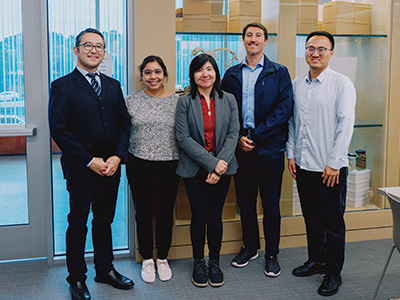
Panelists Juan Castillo (B.S. ’16), Hanh Huynh (B.S., ‘14) and Sima Rantisi (B.S. ’16) shared how their SFSU experience, including the impact of their professors, propelled them to graduate degrees that ultimately led them to their roles at Gilead. Their stories align with U.S. News & World Report’s Top 10 ranking of SFSU for upward socioeconomic mobility in the U.S.

“I had classes with very dedicated professors who took the time to mentor me and inspired me to be diligent with my studies,” said Huynh, who confessed that she did not have good study habits in her public East Bay high school. “The professors and community at motivated to do better and keep learning.”

Learn she did. Following SFSU, Huynh, a Biochemistry major who was her SFSU class valedictorian, earned her Doctor of Pharmacy from the University of Minnesota, followed by a two-year residency in critical care at Hennepin County Medical Center. Prior to joining Gilead, she practiced as a critical care specialist at Stanford Tri-Valley Care. She is currently an associate clinical development director in oncology at Gilead, where she supports Phase 3 clinical trials in endometrial cancer.

Her leave-behind message to SFSU students at the panel discussion was simple: “Surround yourself with people who support you and have your best interests at heart. Never sell yourself too short and always aim high.”

Castillo was the first in his family to attend a four-year institution after two years at junior college. A Bay Area native like Huynh, he wanted to stay close to home to help his family with home responsibilities. He came to SFSU knowing that he wanted to study chemistry.

“I envisioned myself working in a lab, doing experiments, but I did not know that I had the capabilities to take on graduate school,” Castillo says. “But working with the professors at SFSU and doing research really opened my vision to the possibilities of attending graduate school. Once I got further involved in research my advisors pushed and encouraged me to attend go to graduate school and pursue a Ph.D.”

After graduating from SFSU, Castillo, who majored in Chemistry, earned his Ph.D. in Analytical Chemistry from the University of California, Davis, where his research focused on characterizing dietary carbohydrates to understand their role in shaping the gut microbiome (the ecosystem of microbes that live in our intestines). He is a senior scientist at Gilead, where he develops and implements innovative analytical methods to support life-saving therapies.

Castillo told the students at the panel session that he was once in their shoes, not sure where his future laid. “I was trying to figure out my career path, and I did not envision myself at Gilead,” he said. “But, given my research experience and training, I was able to get my Ph.D., and I was capable of landing a job at Gilead.”

The Gilead Foundation has been a valued SFSU partner, contributing $5 million to the University’s new Science and Engineering Innovation Center (SEIC) that opened in January, 2025 as well as student programming and direct student aid.

"We are delighted to support the sciences at San Francisco State University," said Gilead Foundation President Jane Stafford. "Through their research skills, SFSU science alumni continue to be contributing members to the Gilead team as it strives to discover and test new therapies to treat illnesses that affect so many of us."

The Gilead and SFSU partnership extends beyond financial support. Gilead employees actively engage with SFSU students through mentorship, guest lectures and on-campus events. In addition, Gilead scientists are interested in exploring deeper collaborations with SFSU – such as contributing to SFSU’s STEM ​ curriculum and providing more opportunities for students to develop professional skills that will help them to achieve successful careers in biotechnology.
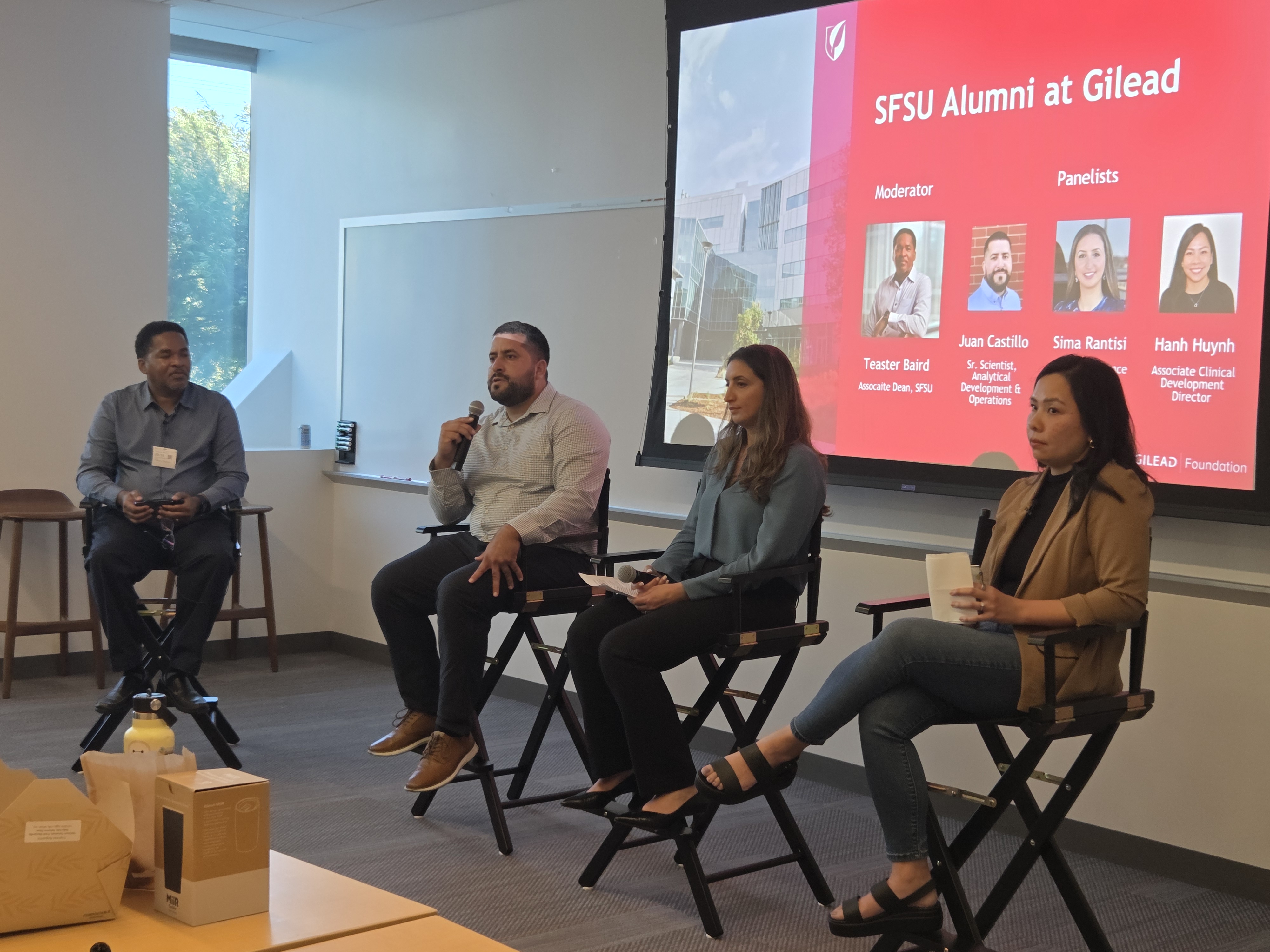
Gilead alum panel

Panelists Juan Castillo (B.S. ’16), Sima Rantisi (B.S. ’16), Hanh Huynh (B.S., ‘14)

For more information about donating to the College of Science & Engineering, contact:

Holly Fincke

Senior Director of Development

College of Science & Engineering

hollyfincke@sfsu.edu

(415) 338-7118

Read more about Holly

Alex Milowski helps SFSU students stay ahead of the curve

Alex Milowski (M.S. ’04, Mathematics) is expanding opportunity for future innovators through philanthropy that supports the study of mathematics, data science and machine learning.

You could say Alex Milowski (MS ’04, Mathematics) has always stayed ahead of the curve – and his career makes a strong case.

A glance at his bio reveals a researcher, developer, entrepreneur, mathematician and computer scientist. Since the early 1990s, he has helped shape web and semantic technologies, focusing on machine learning, natural language processing, data representation, algorithms and large-scale data systems. Along the way, he has founded and funded multiple companies and contributed to industry leaders including Stitch Fix, Redis, and Orange.

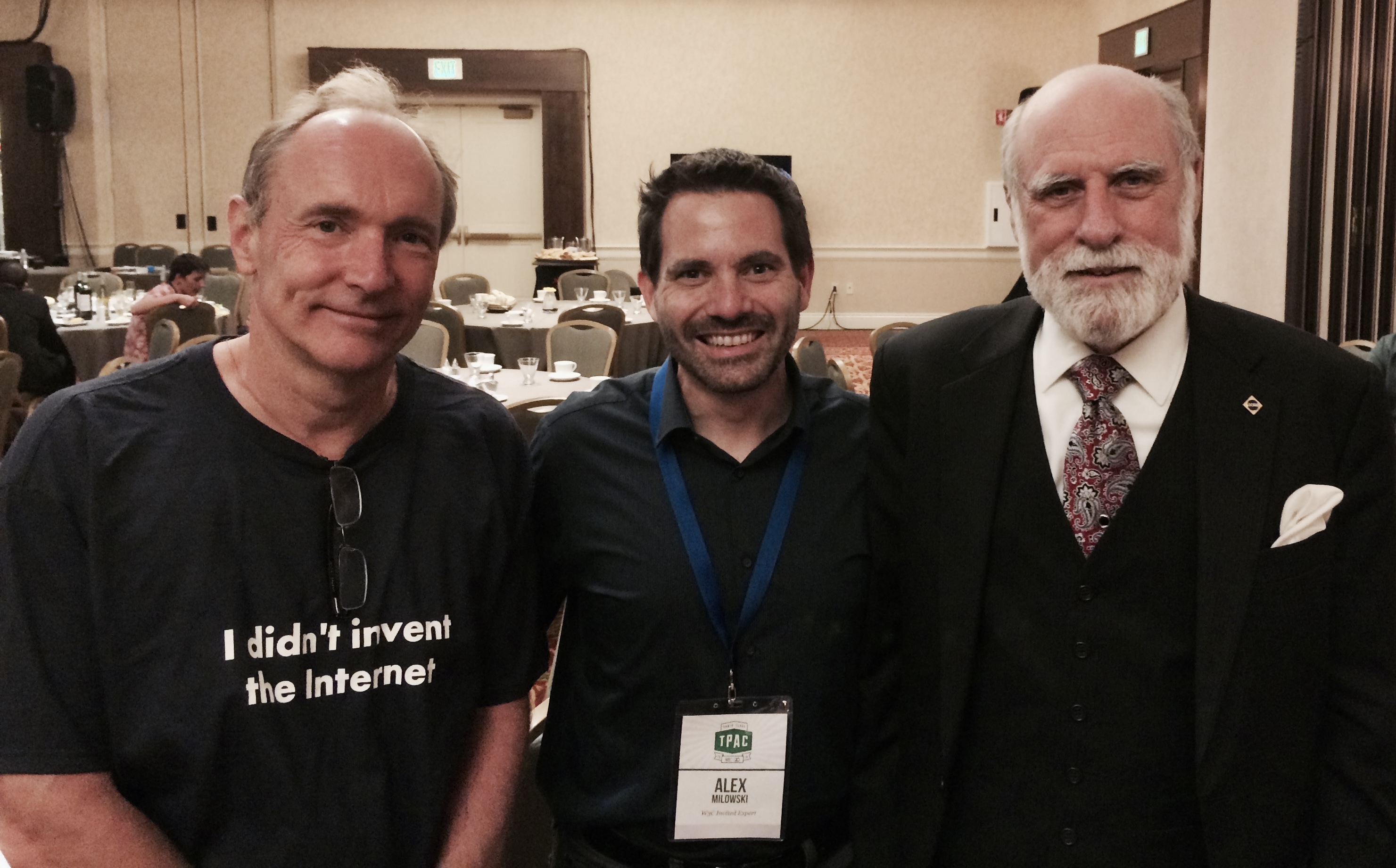
Earlier in his career, he was an invited expert to the World Wide Web Consortium (W3C), Alex collaborated with Tim Berners-Lee – widely regarded as the inventor of the World Wide Web – and many others. That trajectory is especially striking considering his roots in a small, frigid town in northern Minnesota, where temperatures regularly drop to –40°F and automakers test vehicles under extreme conditions.

Today, Alex is widely recognized for his expertise in XML technologies, the semantic web and machine learning – fields that underpin the rapid evolution of artificial intelligence.

But being ahead of the curve, for Alex, also means investing in those who follow. In 2024, after many previous years of donations to San Francisco State University, Alex established an endowed scholarship at SFSU. Building on that commitment, he recently funded the Milowski Data Science and Machine Learning Summer Scholars program – an 8-week, faculty-mentored research experience designed to meet the growing demand for AI-driven skills.

The program gives students across the College of Science & Engineering (CoSE) hands-on experience applying data science and machine learning to real-world problems at scale. Participants also engage in weekly professional development, including networking and presentation training, to prepare for future careers.

“Technology and the application of machine learning are changing at an ever-increasing pace, and our research and academic pursuits need to evolve alongside it,” Alex says. “I wanted to bring data science and machine learning together for aspiring researchers and practitioners. Data science asks the questions; machine learning helps answer them. They naturally complement each other and should be pursued together.”

“I wanted to bring data science and machine learning together for aspiring researchers and practitioners. Data science asks the questions; machine learning helps answer them. They naturally complement each other and should be pursued together.”

—Alex Milowski (M.S. ’04)

That vision becomes reality this summer. Graduate students Serena Chang and Matthew Bush will serve as the program’s inaugural scholars. Working with Biology Professor Andrea Swei, Serena will study how mountain lions influence tick populations and the risk of tick-borne diseases like Lyme disease. Matthew, collaborating with Mathematics Professor Tao He, will conduct research to develop a non-invasive system to analyze human gait using floor vibration sensing – research that could aid early detection of mobility decline and neurological disorders.

“We are thrilled to launch the inaugural Milowski Data Science and Machine Learning Summer Scholars Program,” says CoSE Dean Carmen Domingo, PhD. “Providing funded summer research puts students on a path toward career success. Many of our students would otherwise take unrelated summer jobs to cover expenses. This program allows them to advance their research, strengthen their skills and better prepare for a competitive job market. Alex has provided a wonderful example of the impact an alumnus can have on our students.”

“This program allows them to advance their research, strengthen their skills and better prepare for a competitive job market. Alex has provided a wonderful example of the impact an alumnus can have on our students.”

—CoSE Dean Carmen Domingo, Ph.D.

Serena is grateful for the research opportunity that awaits her this summer. “I am really honored to have been nominated by Dr. Swei and selected for the Milowski Data Science and Machine Learning Summer Scholars program,” she says. “Support from this program gives me the opportunity to make concerted efforts to expand my experience and skills with data science and machine learning approaches. I am confident this will make me a better researcher as I develop my career in disease ecology.

“Plus, I am excited to work to answer my research question of how top predators impact Lyme disease transmission risk using a machine learning model approach that's new to me. I find both the topic and effort to develop my computational skills really engaging. I believe participation in this program will make me a stronger candidate for PhD programs in the 2027-28 academic year, which I hope will be the next step in my career path to becoming a professor of biology with a focus in disease ecology and One Health.”

Alex’s path to this moment began early. While still in high school, he started taking college courses and quickly developed a reputation as a skilled programmer. He paid his way through the University of Minnesota by writing software – first for the student newspaper, then for the university’s computing department – before moving into private industry, where he built large-scale print production systems for a large financial printing company. That unique experience introduced him to SGML and the precursors of the Web.

His curiosity soon drew him into the early days of Gopher, a pre-Web internet protocol for organizing and retrieving information. He became an expert in early Web technologies, launched a consulting company around it and eventually sold that company to a startup. That opportunity brought him to San Francisco – and ultimately to SFSU, where he earned his master’s degree in Mathematics before continuing on to a PhD in Informatics at the University of Edinburgh.

His experience at SFSU left a lasting impression. Inspired by the opportunities the university provides its students, he established the Alex Milowski Scholarship in Mathematics in 2010 and endowed it in 2024.

Now living near campus, Alex regularly attends CoSE events to connect with students and see their work firsthand, including serving as a judge at the recent CoSE Student Project Showcase.

“One thing I enjoy about coming to events is seeing the breadth of student work,” he says. “They’re articulate, excited, and deeply engaged in their research. It’s a clear reflection of what San Francisco State is doing well.”

“One thing I enjoy about coming to events is seeing the breadth of student work. They’re articulate, excited, and deeply engaged in their research. It’s a clear reflection of what San Francisco State is doing well.”

—Alex Milowski (M.S. ’04)

Through his philanthropy – made possible by a lifelong passion for programming, data science and innovation – Alex is opening doors for the next generation. His goal is simple: to help SFSU students not just keep up with change, but stay ahead of it.

Alex Milowski with the father of the World Wide Web Tim Berners-Lee (left) and a founder of the internet Vint Cerf (right)

Above: Alex Milowski (center) with the inventor of the World Wide Web Tim Berners-Lee (left) and Vint Cerf (right), considered one of the founders on the Internet

For more information about donating to the College of Science & Engineering, contact:

Holly Fincke

Senior Director of Development

College of Science & Engineering

hollyfincke@sfsu.edu

(415) 338-7118

Read more about Holly

SFSU School of Engineering students join new Apple Next-Gen Innovators Mentorship program

SFSU School of Engineering students were selected for Apple’s highly competitive Next-Gen Innovators Mentorship Program, gaining access to industry mentorship, technical training, and professional networks

A new partnership between Apple and San Francisco State University is opening doors for Engineering students eager to launch their careers in tech. Unveiled during a campus event Oct. 30, Apple’s Next-Gen Innovators Mentorship program matches 10 SFSU sophomores and juniors with professional engineers from one of the world’s leading technology companies.

The exclusive eight-month program, part of a national initiative that includes 23 universities selected by Apple, provides one-on-one mentorship, exposure to technical careers and opportunities for professional growth. Each student is paired with an Apple engineer for monthly guidance on everything from resume building to networking and technical deep-dives.

For many students, the program represents more than just career preparation — it’s a chance to rethink what’s possible.

“I’m so excited to be in this program to get an inside look into the industry, especially Apple. I hadn’t considered Apple a possibility for myself until now,” said Albany Lansang, a third-year SFSU Mechanical Engineering student. “I hope to gain meaningful connections with my mentor, of course, and also between us mentees, and knowledge that will help guide me through the rest of my college career and eventually through my professional career.”

Connie Lee, a third-year SFSU Computer Engineer, echoed the excitement. “I love computers. I love technology. It’s one of the first passions I had as a kid,” Lee said. “Honestly, Apple is a little bit of my dream company.”

At the campus announcement event, SFSU President Lynn Mahoney congratulated the students. “I think there’s probably no more iconic company for the Bay Area than Apple, so congratulations,” President Mahoney told the students. “You came here to study, but your ultimate goal is to have a rewarding career. The link between your studies and career is what you’re doing right now.”

During the program, students will be paired with an Apple engineer who will dedicate time each month to share knowledge and support the student’s growth. Mentees will also have access to career development skills and strategies, including crafting effective resumes, taking deep dives into Apple products, leveraging LinkedIn, and more.

SFSU School of Engineering and Apple Next-Gen Mentorship Program

SFSU School of Engineering and Apple Next-Gen Mentorship Program

SFSU School of Engineering and Apple Next-Gen Mentorship Program

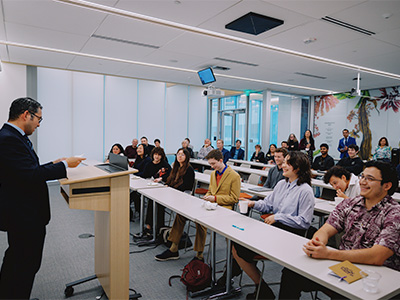
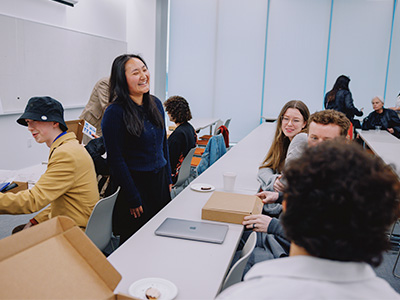
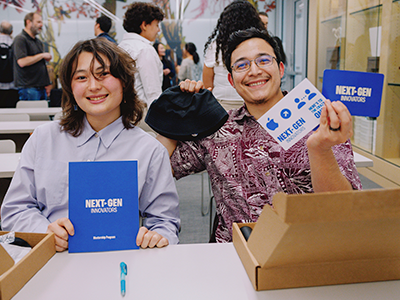
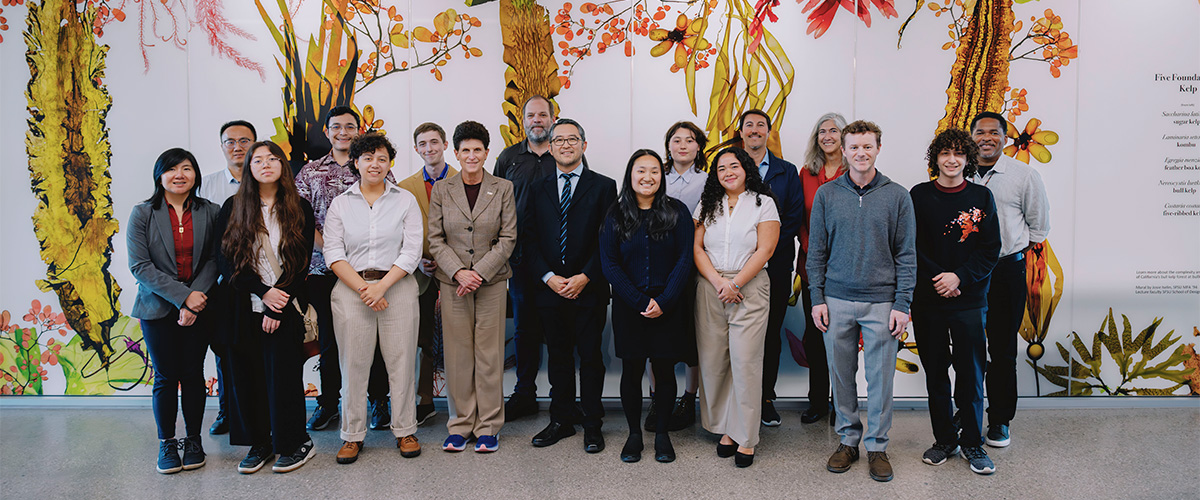
President Mahoney, Dean Carmen Domingo, faculty members from the College of Science & Engineering, and representatives from Apple celebrated SFSU's inaugural Next-Gen Innovators Mentorship cohort.

For more information about donating to the College of Science & Engineering, contact:

Holly Fincke

Senior Director of Development

College of Science & Engineering

hollyfincke@sfsu.edu

(415) 338-7118

Read more about Holly

Kenneth S. Fong (B.A., ’71; M.A., ’74), Ph.D.: Inspiring Discovery, Innovation, and Opportunity

From founding biotech companies to endowing transformative research awards, Kenneth S. Fong (B.A., ’71; M.A., ’74), Ph.D., has advanced science, entrepreneurship, and education at SFSU — including a pivotal gift to the new Science & Engineering Innovation Center

In early September, SFSU hosted the Fong Research Award Symposium to highlight the Kenneth S. Fong Translational Research Award, which funds cross-disciplinary faculty projects advancing real-world solutions. When Kenneth S. Fong (B.A., Clinical/Biomedical Science, ’71; M.A., Microbiology, ’74), Ph.D., reflects on his remarkable career in biotechnology, he traces it back to a single class at San Francisco State University.

“My passion for science began at San Francisco State University in 1970, when I took a molecular biology course taught by Dr. Sarane Bowen,” Fong recalls. “That class sparked my fascination with DNA and RNA and their essential roles in the life of cells.”

That spark led Fong to pursue a Ph.D. at Indiana University and postdoctoral research at UCLA and the National Institutes of Health. In 1984, he founded Clontech Laboratories. “What began in the classroom at SFSU became the foundation for a company that grew to nearly 400 employees over 15 years,” he says. Clontech rose to become one of the largest biomedical tool companies founded by an Asian American in the U.S. before its acquisition by Becton Dickinson in 1999. Fong later launched Kenson Ventures, LLC, a Silicon Valley–based venture capital firm that has invested in and mentored numerous biotech companies through IPOs and acquisitions.

Reflecting on his career, Fong says, “I have come to value sustainability and continuity — principles that guide both my professional endeavors and my contributions to the scientific community.” These principles, together with his gratitude for the opportunities afforded by his education in the U.S. as an immigrant from Hong Kong, continue to inspire his deep connection to SFSU. Over the years, he has given generously of his time, expertise, and philanthropy.

“My passion for science began at San Francisco State University in 1970, when I took a molecular biology course taught by Dr. Sarane Bowen. That class sparked my fascination with DNA and RNA and their essential roles in the life of cells.”  
—Kenneth S. Fong (B.A., ’71; M.A., ’74), Ph.D.

In 2014, he endowed the Kenneth S. Fong Translational Research Award at SFSU, designed to support faculty and student collaborations and innovation in perpetuity. “By generating discoveries that can attract funding from NIH, NSF, and other sources,” Fong says, “the program creates a self-sustaining cycle of research, innovation, and impact.”

Since its launch, the award has funded 11 interdisciplinary projects, engaging 27 faculty and 75 students. These projects have spanned fields as diverse as biomedical engineering, chemistry, biology, physics, and computer science — from robotic exoskeletons for stroke rehabilitation, to breast cancer treatments using diverse ancestry cell lines, to advances in prosthetic arm technology. Collectively, the research has secured more than $21 million in additional funding from national agencies including the NIH, NSF, NASA, and the Department of Defense.

For SFSU student research assistant Charlie Vidal Sanchez (B.S., Civil Engineering, ’20; M.S., Structural & Earthquake Engineering, ’21), the support was life-changing. “It was at SFSU that I saw all the doors open for me where they were once closed, potential seen in me when there was once none, and where I took advantage of every opportunity I could,” he says. With the confidence and experience gained from his participation in Fong-supported research, Charlie went on to win first place in the CSU Research Competition, earn a master’s degree through SFSU’s accelerated program, and launch his own construction company. 

“It was at SFSU that I saw all the doors open for me where they were once closed, potential seen in me when there was once none, and where I took advantage of every opportunity I could.”  
—Charlie Vidal Sanchez (B.S., Civil Engineering, ’20; M.S., Structural & Earthquake Engineering, ’21), who assisted with Fong-awarded research as an SFSU student

Kenneth S. Fong (B.A., ’71; M.A., ’74), Ph.D.

Kenneth S. Fong (B.A., ’71; M.A., ’74), Ph.D.

Dr. Fong speaks at the Ken Fong Research Award Symposium

Dr. Fong speaks at the Ken Fong Research Award Symposium

Ken Fong Award Symposium

Above: Research presentations at the Kenneth S. Fong Translational Research Award Symposium

Ken Fong Award Symposium

Fong’s impact also extends into the heart of campus innovation. Most recently, he became the largest individual donor to the new Science & Engineering Innovation Center (SEIC), playing a pivotal role in creating the 125,000-square-foot hub that “puts science on display” with state-of-the-art labs, classrooms, and collaboration. Opened in 2024, SEIC is home to the Department of Chemistry & Biochemistry and the School of Engineering. The building serves more than 7,000 students in the College of Science & Engineering with studio labs, robotics facilities, makerspaces, energy systems labs, and a student success center. Through Fong’s philanthropy, SEIC empowers faculty, trains students, and advances biotechnology and research at SFSU — aligning with his goal of cultivating a new generation of entrepreneurs and visionary researchers.

“By generating discoveries that can attract funding from NIH, NSF, and other sources, the program creates a self-sustaining cycle of research, innovation, and impact.” 
—Kenneth S. Fong (B.A., ’71; M.A., ’74), Ph.D., about the Fong Research Award

From his beginnings as a curious biology student in the 1970s to his role today as an entrepreneur and philanthropist, Kenneth S. Fong’s legacy at SFSU is one of discovery and innovation. Through his generosity — grounded in gratitude and shaped by his own journey — he has built lasting infrastructure and opportunities, sustaining a cycle of exploration, learning, collaboration, and impact that will continue for generations.


For more information about donating to the College of Science & Engineering, contact:

Holly Fincke

Senior Director of Development

College of Science & Engineering

hollyfincke@sfsu.edu

(415) 338-7118

Read more about Holly

Denny Luther ’65: “SF State Did Me Right”

With a life that has spanned continents, Dennis “Denny” Luther (B.A., Business Administration, ’65) helps students chart their own paths through his family's philanthropic support

From humble beginnings in Placerville, Calif., to the glitz of San Francisco, a two-year stint in the Army in Alaska in the ’60s, living in a van while touring throughout Europe in the ’70s, and finally landing back in San Francisco, the global trek of Dennis “Denny” Luther ’65 is as impressive as his career trajectory and as noble as his desire to help students secure an SFSU education.

Mind you, Denny’s is no ordinary story. Rather, it’s one filled with calculated choices. His decision to attend SFSU ultimately led to a successful career as a computer programmer who, along with his business partner, built, grew, and sold their company. Denny will be the first to tell you that he wasn’t sure how it was going to turn out. In fact, he had doubts that he would even be successful in college and beyond. That success, though, is well proven, and Denny is happy to share the fruits of that success by lending a helping hand to students in need.

Despite his claim that he was not a great student, Denny applied to and was accepted at San Jose State, Fresno State, and SF State. “I picked San Francisco. That’s where the Giants and Niners were and that’s where you could see a good Broadway play,” he says with a laugh.

Turned out to be a great decision. Focusing his studies on business and inspired by his success in classes in Statistics and Programming, Denny graduated with a degree in Business Administration with an emphasis in Quantitative Management. From SFSU, Denny was off to his Army stint where he served as editor of the base newspaper in Alaska. He returned to California and was hired as a salesman for Univac as business computing gained wider acceptance.

Sales, however, were not Denny’s strength. Discouraged, he was about to quit Univac, but his manager saw something in him that stood out and Denny was moved over to support businesses that bought or leased Univac computers. This gave Denny the chance to develop his programming skills to the point where he was teaching companies with computers how to program them to maximize their efficiency. Soon, however, the appeal of travelling across Europe captured his attention, so Denny gave up his Univac job.

After living in a van as he traversed through London, Amsterdam, France, Germany, Spain, and Morocco, Denny returned to San Francisco and connected with an SFSU fraternity brother, Tom Luther (no relation), and tended bar in his restaurant a few nights a week. In the upper floors of the building that housed the restaurant, Denny’s future business partner and former IBM salesman Jack Baird was making a living as a computer programming consultant, focusing on getting doctors, dentists, medical groups, and hospitals to sign up for medical and dental billing services. The benefit for the businesses was that with the computerized billing systems, they would get paid in just a week instead of the traditional 30 to 45 days.

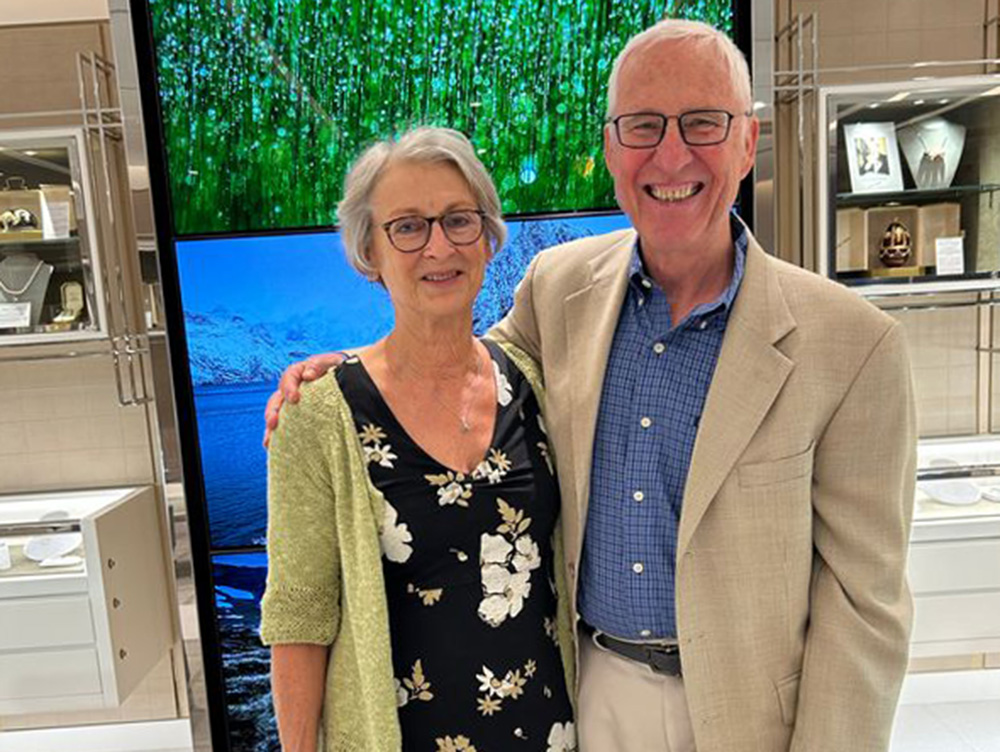
Dennis and Barbara Luther

Dennis and Barbara Luther

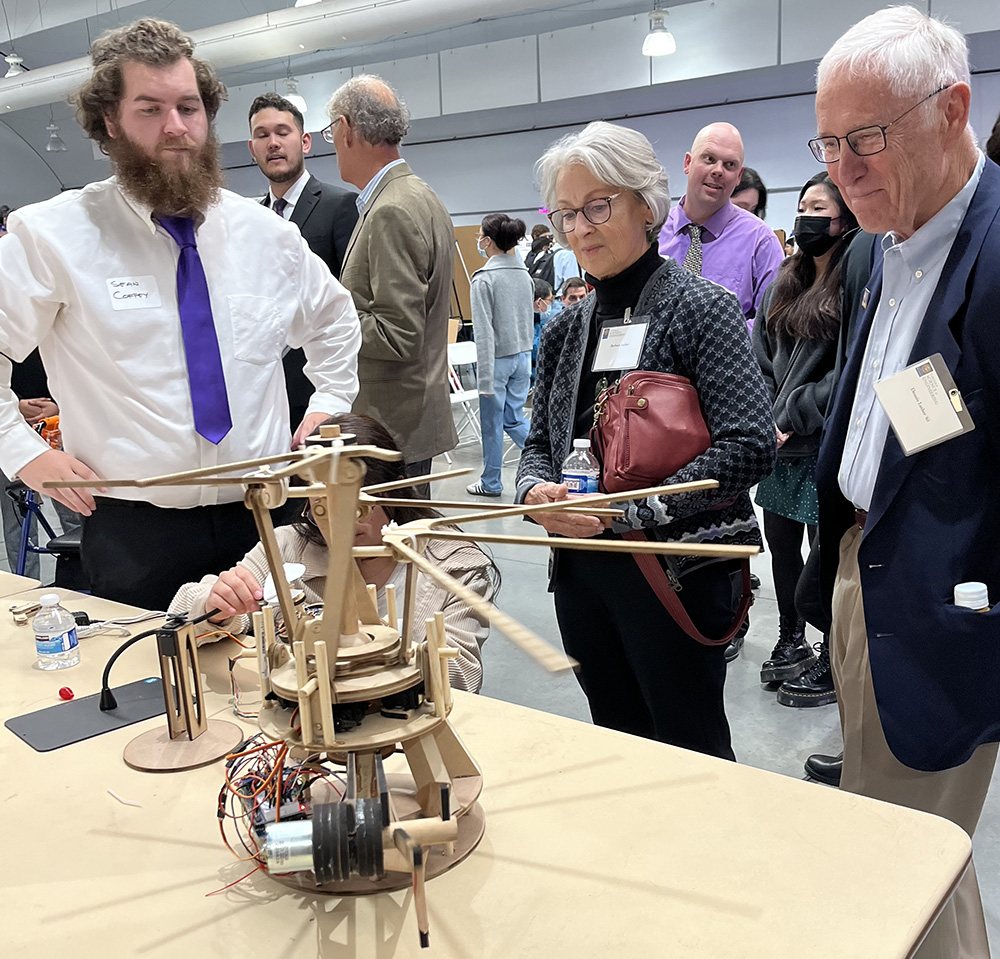
Dennis and Barbara Luther at a student research showcase

Dennis and Barbara Luther at a student research showcase

Denny and Baird teamed up and gained more clients to handle electronic billing to Medicare, Medi-Cal, and other large insurers. Their business, Data Systems Group, caught on, and was purchased by Bluebird, which has since been acquired by Experian Healthcare.

As Denny says, “My party line is I woke up on January 1, 2013 with money in the bank and time on my hands.” As part of the sale, Denny set up a donor advised fund (DAF). A devout Christian, Denny and his wife Barbara share a passion for tithing and they have chosen, through their DAF, to set up a scholarship for SFSU undergraduate students who are majoring in Computer Science, are the first generation in their family to go to college, and who have demonstrated financial need.

“It breaks my heart,” Denny said when asked about his motivation for setting up the scholarship. “College is so damned expensive, and you can’t go there on your own. I’m hoping that this will help them through school and they’ll have a college degree and one thing will lead to another, and then to another.”

Much like one thing led to another and another for Denny, he’s hoping that recipients of the Luther Family Scholarship will find the financial support he and Barbara offer impactful to put them on the course to life-changing learning experiences.

“It breaks my heart. College is so damned expensive, and you can’t go there on your own. I’m hoping that this will help them through school and they’ll have a college degree and one thing will lead to another, and then to another."

—Dennis Luther (B.A., Business Administration, ’65)

Denny is grateful that he attended SFSU, something he calls a wonderful experience. “I still have friends from State. I wasn’t sure that I had the wherewithal to be a college student, but then in my sophomore year I got a B in biology and said, ‘Well, I can do this!’”

Not only could he do it, but Denny did it very well. And, today he stands by the words on the customized donor brick he placed outside of the Nassar Family Gym: “Denny Luther ’65, SF State Did Me Right.”

For more information, contact:

David Fierberg, MNA, CFRE

Executive Director of Development

dfierberg@sfsu.edu

(415) 405-3966

Read more about David

Scholarship awardees amongst the outstanding graduates honored at 2024 Commencement

Four of the graduates were awardees of donor-funded scholarships while studying at San Francisco State University

A dozen outstanding graduates were honored during San Francisco State University’s 123rd Commencement ceremony, held at Oracle Park on May 24. They represented their more than 7,300 graduating peers in the Class of 2024.

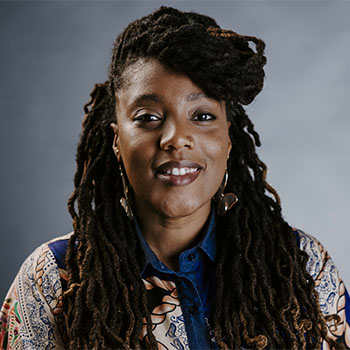
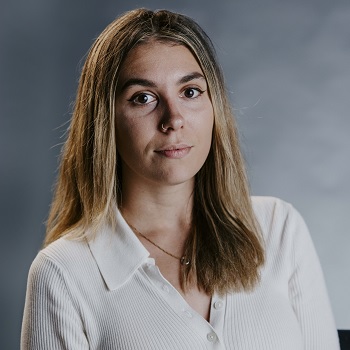
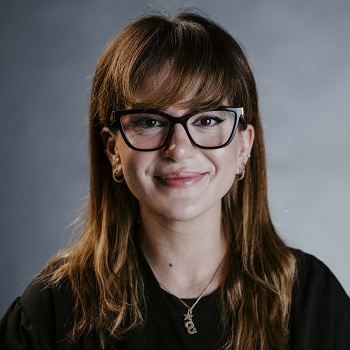
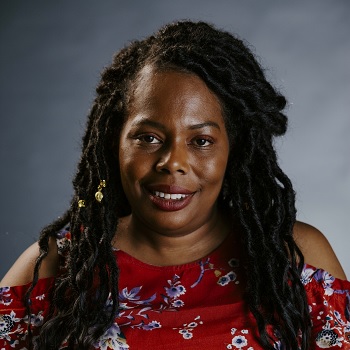
As part of a longstanding tradition, each of the University’s six academic colleges selected an undergraduate and a graduate student to represent their classmates and wear their college’s academic hood during the ceremony. Additionally, two of the hood recipients, one undergraduate and one graduate student, delivered a Commencement address. Four of the students were awardees of donor-funded scholarships while studying at San Francisco State University: Jazz Monique Hudson, Zen Lewis, Su Ilayada Ozcan, and Monique Scott. Click on each of the students' names below to learn more about them.

Jazz Hudson - student

Jazz Monique Hudson

Zen Lewis - student

Zen Lewis

Su Ilayada Ozcan - student

Su Ilayada Ozcan

Monique Scott - student

Monique Scott

Jazz Monique Hudson: Undergraduate Hood Recipient

B.A., Africana Studies
College of Ethnic Studies

Jazz Monique Hudson, an Oakland native with over 15 years of expertise in youth development, educational arts, social justice and organizational change, epitomizes resilience and commitment to societal transformation. Despite the challenges she faced early in her life as a former foster youth and teenage mother, Hudson has overcome them and is now dedicating her life to being an advocate, artist and educator.

For example, Hudson was involved with organizations like the National Black Women’s Justice Institute, Black Youth Project 100 (where she was a founding member) and the Guardian Scholars Program. She was also a program director and founding member of the EMERGE Reentry Program, which focuses on supporting young women of color reintegrating into society after incarceration and academic pushout. Additionally, Hudson was a victim advocate for the San Francisco District Attorney and has had residencies, workshops and performances at universities like UC Berkeley and Princeton.

While studying at SF State, Jazz was awarded the Sylvan and Donna Kline Guardian Scholars Memorial Scholarship, a named scholarship to honor the memory of Joanne Rae Kline, the daughter of Sylvan and Donna Kline, who empowered others through her advocacy of education. The endowed scholarship strengthens and permanently supports SF State’s Guardian Scholars Program, which empowers college students who are transitioning out of the foster care system.

Serendipitously, her son’s 17th birthday coincides with the SF State 2024 Commencement, which Hudson says is a reminder of the strength and resilience found in the journey of motherhood. After graduation, she plans to pursue SF State’s Pre-Health Professions Post-Baccalaureate Certificate program, which will help her take the next step toward pursuing a career in health care as an osteopathic doctor specializing in allergy and immunology.

Zen Lewis: Undergraduate Hood Recipient

B.A., International Relations/Political Science
College of Liberal & Creative Arts

In 2019, Zen Lewis’ journey to SF State began with her emigration from Serbia with the vision of achieving the American dream. As an 18-year-old in a new country with no financial support, she faced daunting challenges with housing and food insecurity, while attempting to find full-time employment with limited English fluency and work experience.

Today, Lewis is graduating with a double major in International Relations and Political Science with the highest honors, accompanied by Sigma Iota Rho and Pi Sigma Alpha societal honors. She represents the will and determination of young immigrant women who hail from war-torn nations to forge a new path, both for themselves and their home countries, so that those wars never occur again.

Lewis is a force of nature who speaks three languages, works full time in the wedding industry and serves as managing editor of the International Relations Journal. While earning the Migration and Refugee Studies certificate, she has demonstrated an exemplary work ethic, enthusiasm for global politics and resilience in the face of obstacles.

As president of the International Relations Student Association, Lewis has been a driving force, encouraging her fellow students and others in her community to get involved in domestic and international politics. She has represented SF State at Model United Nations and Model European Union conferences, where she received the Outstanding Head of Government Award. 

Lewis won the David Jenkins Scholarship for Political Activism for her impactful advocacy of student rights in a political uprising. She used her senior thesis to expand the discussion and analysis of new regime changes, using Serbia as a case study. Off campus, she has organized pop-up events for local artists and fundraisers for nonprofits.

After graduation, Lewis plans to seek a full-time position in San Francisco municipal government and pursue a law degree.

Su Ilayada Ozcan: Graduate Hood Recipient

M.S., Chemistry (Biochemistry)
College of Science & Engineering

Su Ozcan wants to develop new treatments without side effects. It’s a passion that stems from her early exposure to her grandfather’s battle with cancer. As an undergraduate in Turkey, she explored innovative therapies and gained two years of professional experience working with pharmaceutical companies. With women being relegated to the background and the value placed on science decreasing in her country, Ozcan decided to leave Turkey and pursue her academic goals in the United States.

As an international student at SF State, Ozcan focused on groundbreaking research in enzymology and medicinal chemistry to develop a novel side effect-free treatment for tuberculosis. She published these discoveries in scientific journals. She demonstrated her commitment to making a positive impact beyond the lab by serving as a teaching associate for two years. Accolades for her academic performance and commitment to science include the Henry Bertin Jr. Scholarship, the Agents of Change Build Merck Scholarship, the Bill Plachy TA (teaching assistant) Award and the CSU Trustees Award.

After SF State, Ozcan’s next step is to begin a Chemistry Ph.D. program at the University of Southern California, where she’s already been offered a graduate fellowship. Looking ahead, Ozcan is excited to continue her quest to develop new therapeutics and treatment strategies that will make an impact. She is eager to translate her academic research into practical applications and hopes to eventually establish a pharmaceutical company. Beyond medicine, she aspires to continue being a teacher and create educational opportunities for underprivileged children. She also hopes to provide financial and moral support for others, especially women in science.

Monique Scott: Graduate Hood Recipient

MPH
College of Health & Social Sciences

Monique Scott decided to pursue a Master of Public Health (MPH) degree at SF State after seeing structural and systemic health disparities affect her community. She began her career as a social worker, caregiver and care coordinator, assisting people navigating governmental and nonprofit assistance programs and managing medical conditions.

During the pandemic, she became a resource navigator and case manager for individuals exposed to COVID-19. Seeing how disparities impacted marginalized residents, she wanted to make a larger impact. She became interested in the social determinants of health and how prevention programs could more effectively help communities. 

At SF State, she explored her passion for research with the Health Equity Institute. Her assessment of participation of food establishments in Supplemental Nutrition Assistance Programs (SNAP) in urban university settings significantly influenced a statewide campaign to enhance access to SNAP benefits at CSU campuses.

She also published research on navigating nutrition inequities among pregnant and postpartum mothers and children in BIPOC communities. The Oakland native’s projects also included studies on how urban agriculture can use mutual aid practices and how built environment contributes to the adverse health outcomes of environmental injustices.

While at SF State, she was a Climate Action Fellow, a Graduate Equity Fellow and a President’s Leadership Fellow. She was also awarded the Vincent Costantino University Scholarship. She authored, published and presented her research at multiple local and national conferences. She also participated in the University’s Earth Week 2024.

After graduation, she will continue learning and applying her skills in research, writing and coordination to address health equity in the Bay Area. She plans to continue participating in strategies for community and policy-level interventions for marginalized communities of color. She is grateful for the SF State connections that contributed to her accomplishments.

Rising star: University researcher Berenice Baca achieves firsts in sea star research

With faculty support, a scholarship award-winning student expands class project into a graduate research project

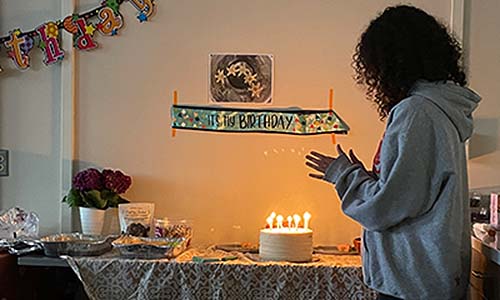
It’s not often that one gets to throw starfish a birthday party. Some species — like the six-rayed sea star Leptasterias — are notoriously difficult to keep alive in the lab, making even first birthdays a rarity. So when San Francisco State University researcher Berenice Baca achieved the seemingly impossible feat of raising Leptasterias specimens for an entire year, her lab made sure to celebrate.

Baca is among the first in her field to successfully rear Leptasterias embryos to reach the one-year milestone in the lab. And to think, this project started in an undergraduate class with San Francisco State Biology Professor Sarah Cohen.

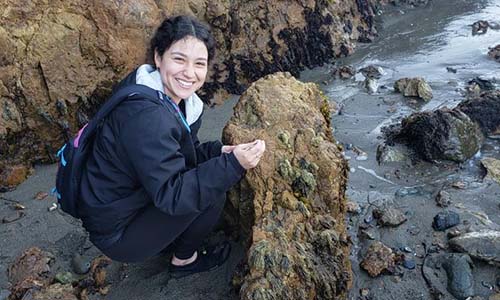
“Because of that study I started as an undergrad, I was able to grow [Leptasterias] up to a year, which is really exciting,” said Baca, who joined Cohen’s lab as an undergraduate researcher and is now an SF State master’s student. She’s been with this project for less than two years but she’s already shared her work at national and international conferences, won research awards, attended research workshops and worked with KQED to highlight these sea stars.

Baca’s work could help Leptasterias and other species feeling the impact of grave challenges. Sea stars face the constant threats of climate change and sea star wasting disease, a mysterious condition wiping out entire species. “We tend to notice or shift our attention towards certain species when it’s endangered or almost gone,” Baca explained. “We should try to address [these issues] now rather than wait until the species is almost completely gone.”

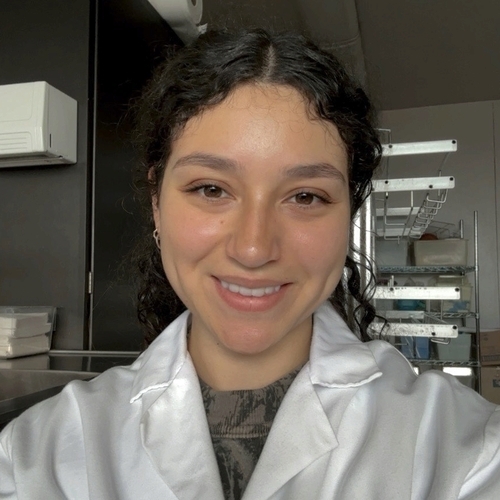
Headshot of SF State student researcher Berenice Baca
SF State student researcher Berenice Baca

Berenice Baca

Happy birthday, dear Leptasterias

Baca studies the developmental patterns of two species of Leptasterias sea stars (Leptasterias pusilla and Leptasterias aequalis). These species reproduce via brood-fostering, which is akin to a hen sitting on her eggs. While somewhat common among other animals, it’s a rare approach among marine species. In the wild, maternal sea stars protect 50 – 1,500 embryos on their underside until their young stars are ready to be independent. Baca successfully raised these embryos to a juvenile stage in the lab without maternal care (i.e., without brooding). As part of this project, she developed protocols for this process and gleaned unique insight about Leptasterias development.

“As I was starting this project, I realized there’s no information on this, which drove me a little crazy,” Baca said, noting that the knowledge gap fueled her curiosity and determination.

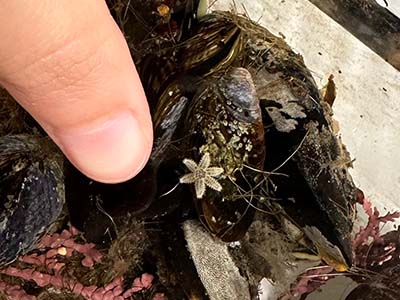
Her first step was to give the sea stars a laboratory home as cold as their native habitat. Baca first raised the stars at 9 to 10 degrees Celsius in a classroom cold room before moving them to a dedicated deli fridge set at 12 to 13 degrees Celsius. Next, she needed to ensure that the stars didn’t starve. This was quite the saga, Baca explains, because the stars kept losing interest in readily available fish food. It turned out Baca’s microscopic juvenile starfish — approximately 0.2 cm in size — required live sea snails, copepods and barnacles they could hunt.

“I ended up getting these microscopic snails that required really fine tweezers to get them out of barnacles. I was doing this at 5 in the morning or very late at night because I have to correlate [my work] with the tides,” she explained.

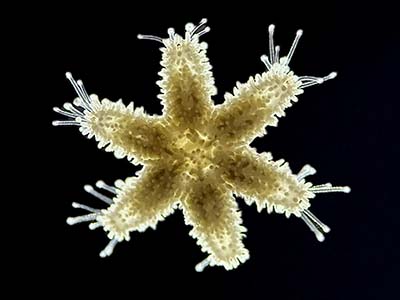
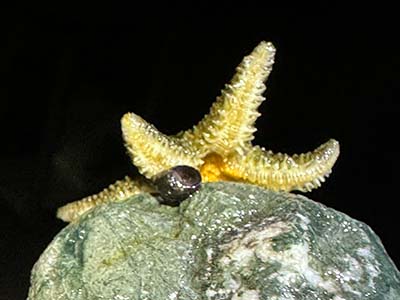
six-rayed sea star Leptasterias

Juvenile Leptasterias less than 2 cm in size.

six-rayed sea star Leptasterias

Sea star next to a finger for scale.

six-rayed sea star Leptasterias

Sea star hunting a sea snail.

Comparable studies on Leptasterias failed to grow the early juveniles in the lab and only one known study was able to hatch these stars. Extending Leptasterias’ lifespan in the lab gave Baca the opportunity to document their development as early as eight hours to 31 days, allowing her to capture beautiful images of fertilized eggs and snapshots of intermediate stages. By day 44, her juvenile stars began taking on a familiar six-armed star shape, and by 10 months the stars were 1.3 cm or bigger and started exhibiting hallmark coloration and patterns. Sharing her work at conferences, she was heartened to hear other scientists share excitement for her work and give her words of encouragement.

Baca and the Cohen lab even worked with KQED to feature Leptasterias in a new episode of its science video series “Deep Look,” presented by PBS Digital Studios. Scroll to the end of this story to see the video, which has nearly a quarter-million views on YouTube. 

Growing up alongside her stars

Coming to SF State, Baca knew she wanted to do research, but she’s still a bit awestruck by how her research experience has evolved. When she enrolled in Cohen’s “BIOL 586GW: Marine Ecology Laboratory — GWAR,” Baca wanted research experience, but she didn’t anticipate it would lead her to pursue a master’s degree.

“It’s really nice that Sarah [Cohen] is really good at figuring out your interest and connecting you with the right people,” Baca said, explaining that Cohen encouraged her to apply for grants and scholarships, participate in conferences and attend science workshops.

Happy birthday cake and candles for the six-rayed sea star Leptasterias

Baca’s honors included the Achievement Reward for College Scientists (ARCS), Step to College and University scholarships. “That really helps. Sometimes you feel lost and having that [support] really helps in initiating your own project or research. It actually makes you feel like a scientist.”

With daily lab work, field research and conferences, being a scientist has become a big part of her life. Baca, a first-generation student, previously maintained multiple jobs and worked full-time in the fields picking blueberries and grapes to support her University education. Growing up in a small town that lacked proper science education, she had an unsatisfied desire to learn more. It’s that natural and unwavering curiosity that’s driven her throughout her research, especially when it gets hard.

“I’m really thankful for the entire Cohen lab,” Baca said, adding that Cohen’s and her lab mates’ support and encouragement have been instrumental. “I believe without them I wouldn’t have anything.”

For more information about donating to the College of Science & Engineering, contact 
Holly Fincke at hollyfincke@sfsu.edu