Sutter’s CPMC and San Francisco State University Open Pediatric Simulation Room
Sutter Health’s $200,000 investment expands hands-on training to strengthen pediatric nursing workforce in the Bay Area
San Francisco — May 4, 2026 — Sutter’s CPMC, part of Sutter Health, and San Francisco State University (SFSU) today announced a milestone in their partnership to advance pediatric nursing education through a $200,000 Sutter Health investment. The funding supports a new, fully equipped pediatric simulation room on the SFSU campus designed to strengthen hands-on training for future nurses in the San Francisco Bay Area. Through the collaboration, graduates are expected to enter pediatric units better prepared, potentially reducing onboarding time and improving early-career readiness for employers like Sutter and others across the region.
The new initiative builds on a successful academic-clinical collaboration between Sutter’s CPMC and SFSU that began in 2024 to expand clinical placements for nursing students, an effort which allowed the university to increase enrollment in its Accelerated Bachelor of Science in Nursing Program by 25%.
“We are grateful to Sutter Health for their investment in our pediatric simulation lab. This partnership strengthens how we prepare our nursing students by giving them access to realistic pediatric training environments earlier in their education,” said SFSU President Lynn Mahoney. “It expands what is possible within nursing education and ensures our graduates are ready to serve the needs of patients and families as they transition from learning into practice.”
“This partnership strengthens how we prepare our nursing students by giving them access to realistic pediatric training environments earlier in their education. It expands what is possible within nursing education and ensures our graduates are ready to serve the needs of patients and families as they transition from learning into practice.”
—SFSU President Lynn Mahoney
Pediatric workforce needs in the Bay Area
Hospitals and health systems across California continue to need more well-trained nurses across all nursing specialties, with pediatric care among the most specialized and difficult areas to staff. At the same time, limited clinical placement opportunities, also called clinical rotations, have constrained nursing program growth, even as demand for care continues to rise.
“As a profession, nursing continues to face significant workforce shortages,” said Elaine Musselman, PhD, RN, director and professor of pediatrics at SFSU. “Pediatric care is a one of the most specialized and high-acuity areas where that gap is especially visible, due in part to fewer opportunities to train on complex cases and competition among nursing programs for clinical placements. Simulation-based learning helps bridge that gap by allowing students to practice critical skills in a safe environment before they reach the bedside. By providing a space for deliberate practice and error, we’re ensuring more consistent competency for our students, something employers look for in future nurse candidates.”
Preparing practice-ready pediatric nurses
The pediatric simulation room began pilot use in March 2026 and will be fully integrated into SFSU’s nursing curriculum in fall 2026. Once fully implemented, the space will support approximately 120 pre-licensure students each year — 80 students in the fall and 40 students in the spring.
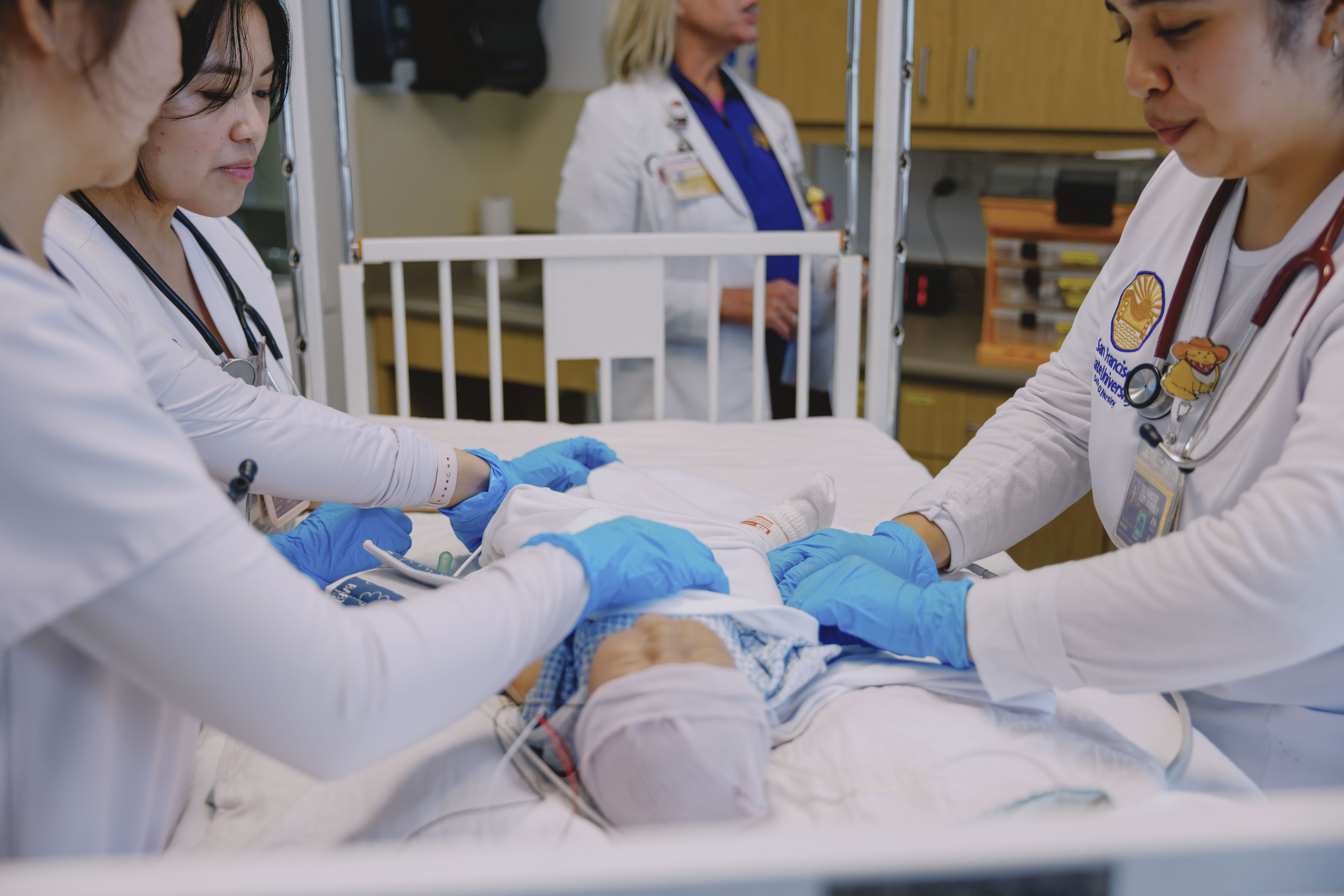
The simulation environment, complete with a wireless infant manikin and hospital-ready equipment, is designed to replicate pediatric hospital workflows, including those used across Sutter facilities like Sutter’s CPMC. Inside the room, students get practice recognizing early signs of patient deterioration, administering IV therapy with syringe pumps, responding to pediatric emergencies and managing care across multiple patients. Their training also emphasizes communication with families and interdisciplinary care teams, including physicians and respiratory therapists, reflecting the realities of pediatric hospital settings.
Each simulation begins with a structured pre-briefing that establishes expectations and psychological safety. Students then participate in realistic clinical scenarios using a wireless manikin, followed by a guided debrief focused on clinical reasoning, communication and decision making.
This hands-on approach to learning is designed to strengthen clinical judgment in pediatric care, where patients require distinct physiological assessment and communication strategies compared to adult populations. It also provides consistent exposure to high-risk, low-frequency pediatric emergencies that students may not regularly encounter during their clinical rotations.
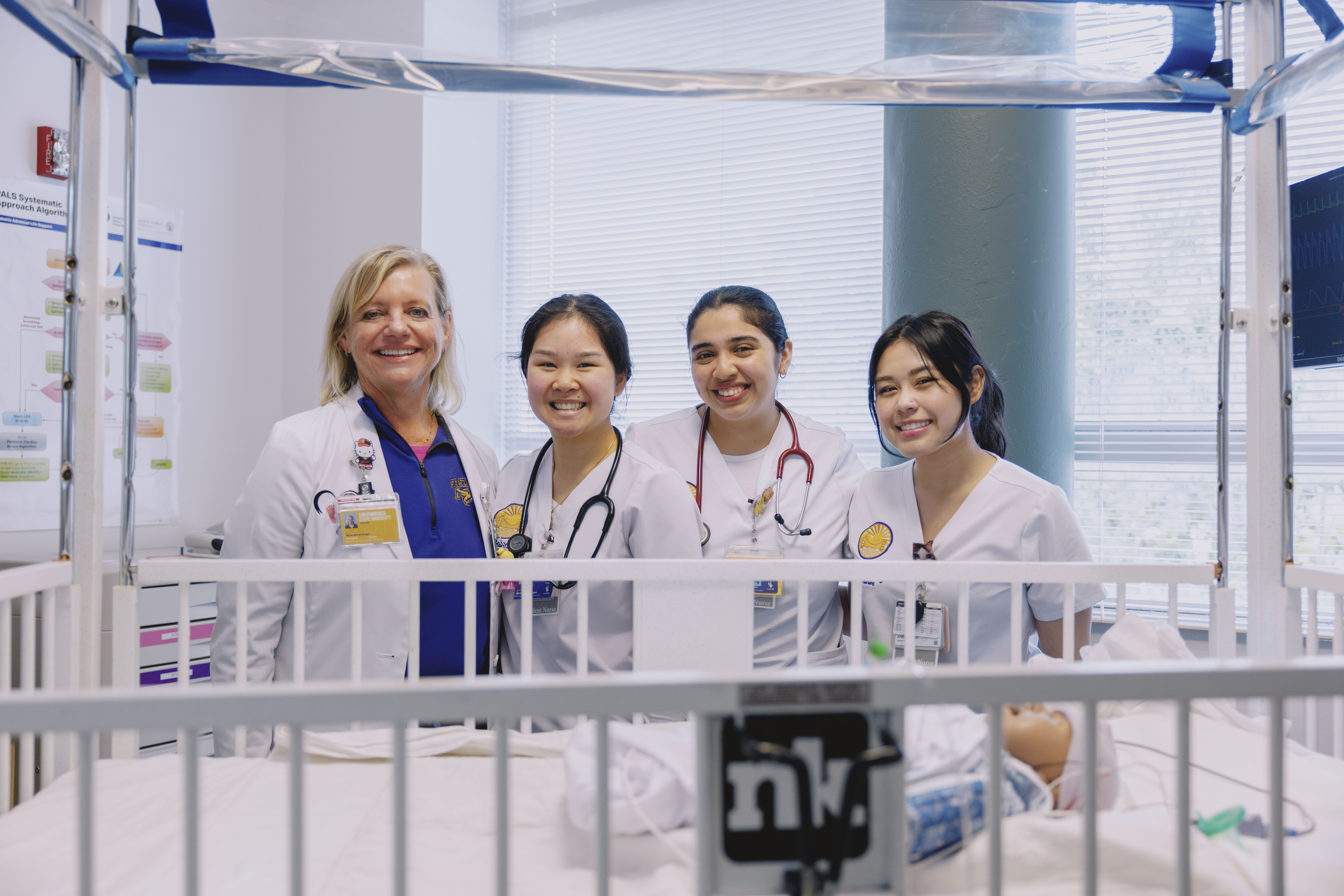
Sutter's CPMC has invested in a new, fully equipped pediatric simulation room within the SFSU School of Nursing
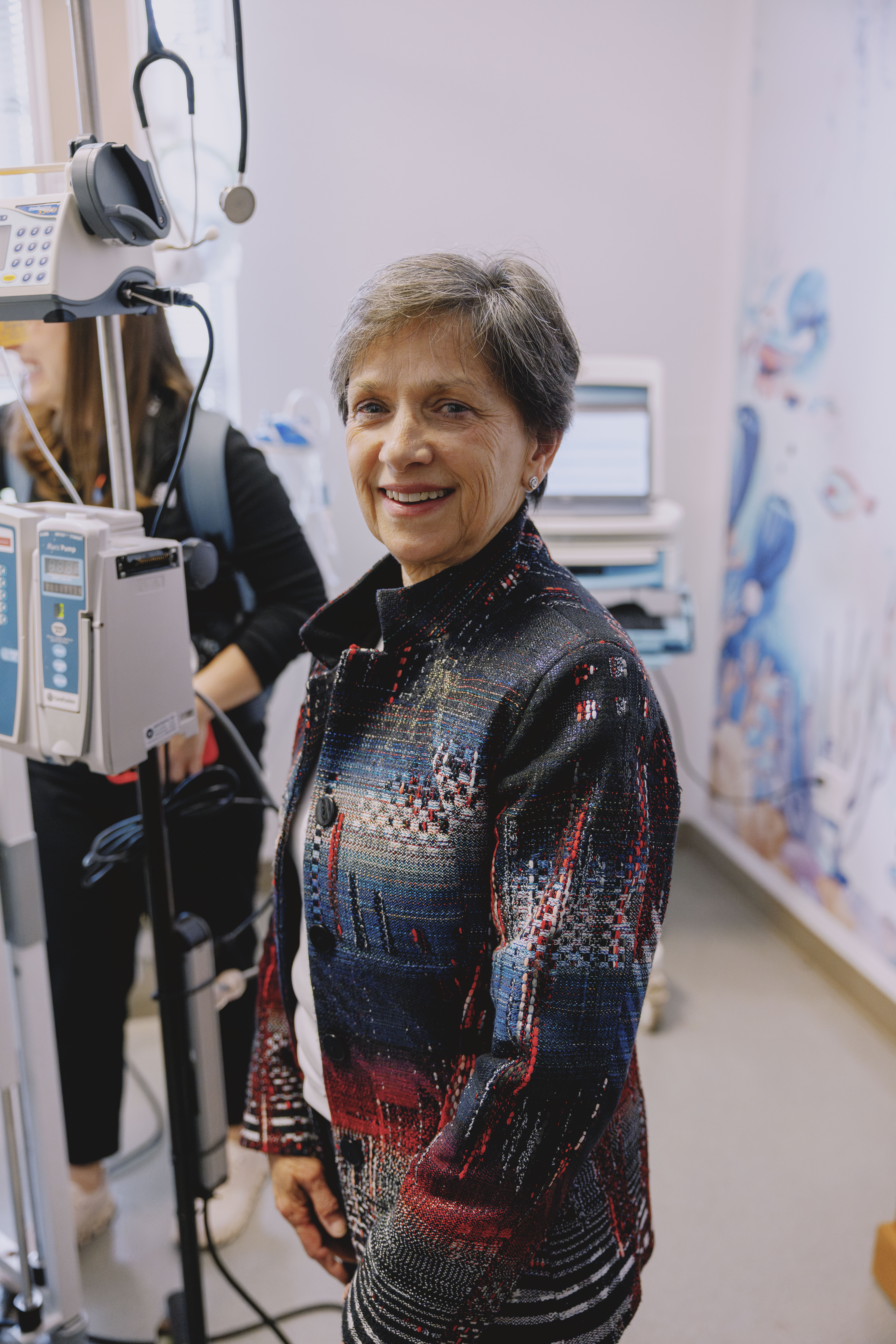
Elaine Musselman, PhD, RN, director and professor of pediatrics at SFSU
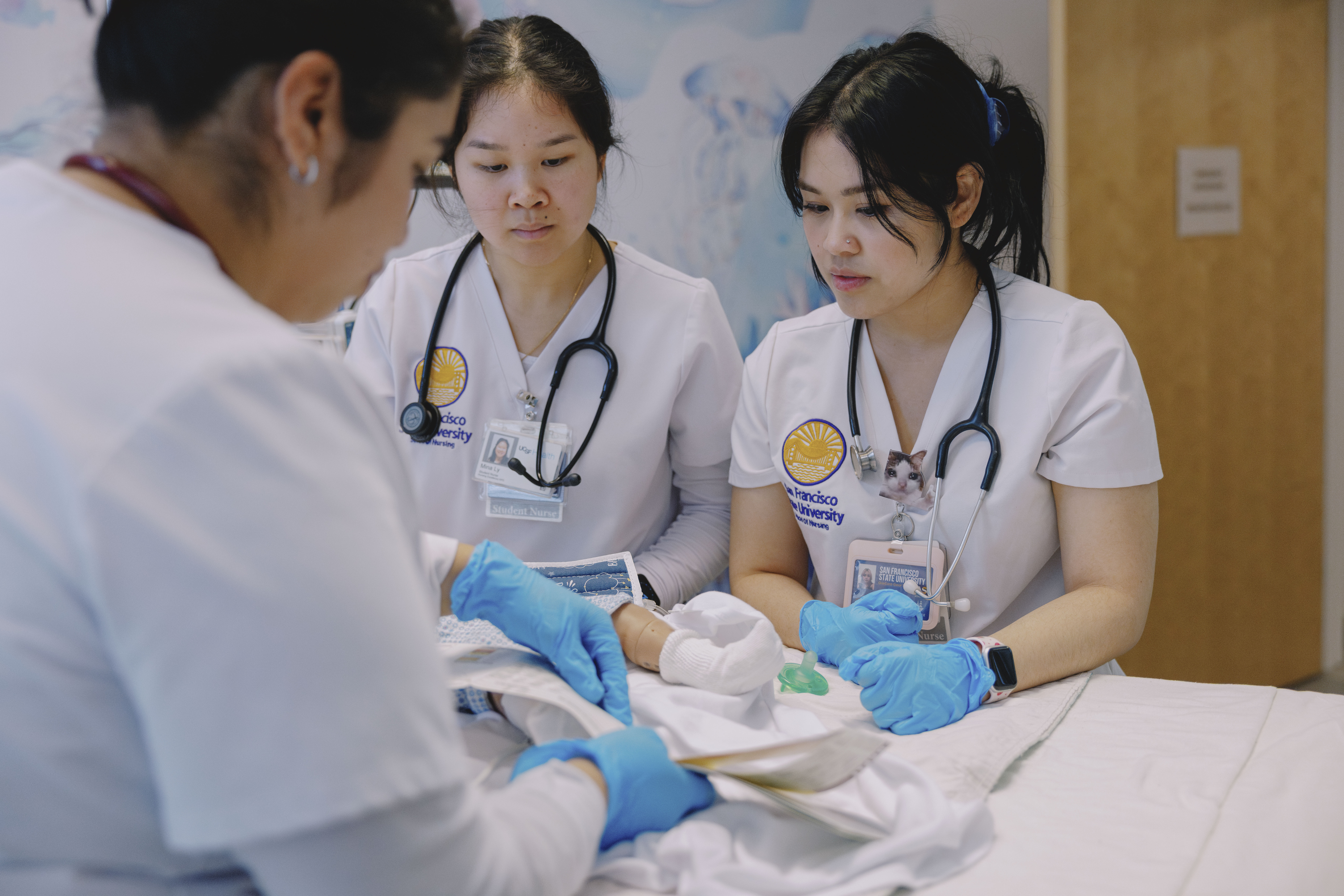
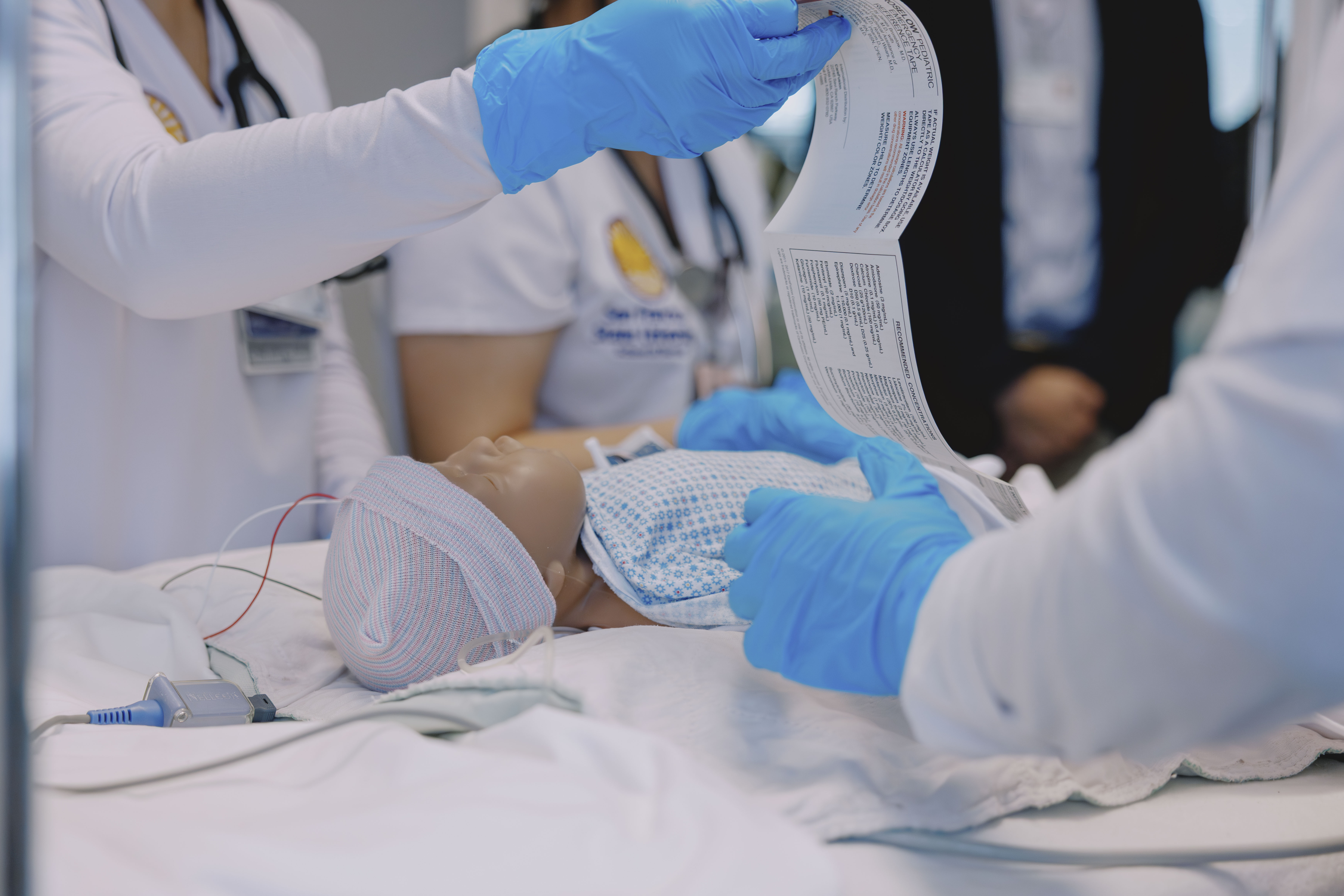
Above: The simulation environment, complete with a wireless infant manikin and hospital-ready equipment, is designed to replicate pediatric hospital workflows
“As nursing students transition into real-world care, Sutter Health aims to give them every advantage through training that aligns with the clinically excellent standards of our hospital units,” said Hollie Seeley, CEO of Sutter’s CPMC. “We are pleased to see the deepening of our partnership with SFSU and the ability for both our organizations to invest in the future of nursing through innovative, workforce-focused education.”
“It’s exciting to see a simulation space like this come to life and be put into practice,” said Lauren O’Neill, chief nurse executive at Sutter’s CPMC. “Exposure to complex pediatric scenarios is critical for nurses who want to work in these settings — even in a simulated environment. This type of immersive training at SFSU, made possible by Sutter Health, will also help address local and regional workforce needs by strengthening the pipeline of nurses who are confident in their pediatric care skills. We are grateful to the faculty and leadership at SFSU who saw this need and worked with us to make it a reality for this next generation of nurse caregivers.”
“Exposure to complex pediatric scenarios is critical for nurses who want to work in these settings — even in a simulated environment. This type of immersive training at SFSU, made possible by Sutter Health, will also help address local and regional workforce needs by strengthening the pipeline of nurses who are confident in their pediatric care skills.”
—Lauren O’Neill, chief nurse executive at Sutter’s CPMC
About Sutter Health
Sutter Health is a not-for-profit health care system dedicated to providing comprehensive care throughout California. Committed to advancing innovative patient care, healthy outcomes and community partnerships, Sutter Health is pursuing a bold new plan to reach more people and make excellent health care more connected and accessible. Sutter currently serves more than 3.5 million patients, thanks to a dedicated team of more than 60,000 employees and clinicians, and 14,000+ affiliated physicians, with a unified focus on expanding care to serve more patients.
Sutter delivers exceptional and affordable care through its hospitals, medical groups, ambulatory surgery centers, urgent care clinics, telehealth, home health and hospice services. Dedicated to transforming health care, at Sutter Health, getting better never stops.
Contacts
Dave Knutson, Senior PR and Communications Specialist, SFSU
dknutson@sfsu.edu
651-260-8288
Ashley Boarman, Sutter Health Media Relations
ashley.boarman@sutterhealth.org
443-248-4532
For more information about donating to the College of Health & Social Sciences, contact:
Dafna Kapshud, CFRE
Senior Director of Development and Campaign Manager
College of Health & Social Sciences
(415) 338-7112