SFSU Day of Remembrance connects history and community
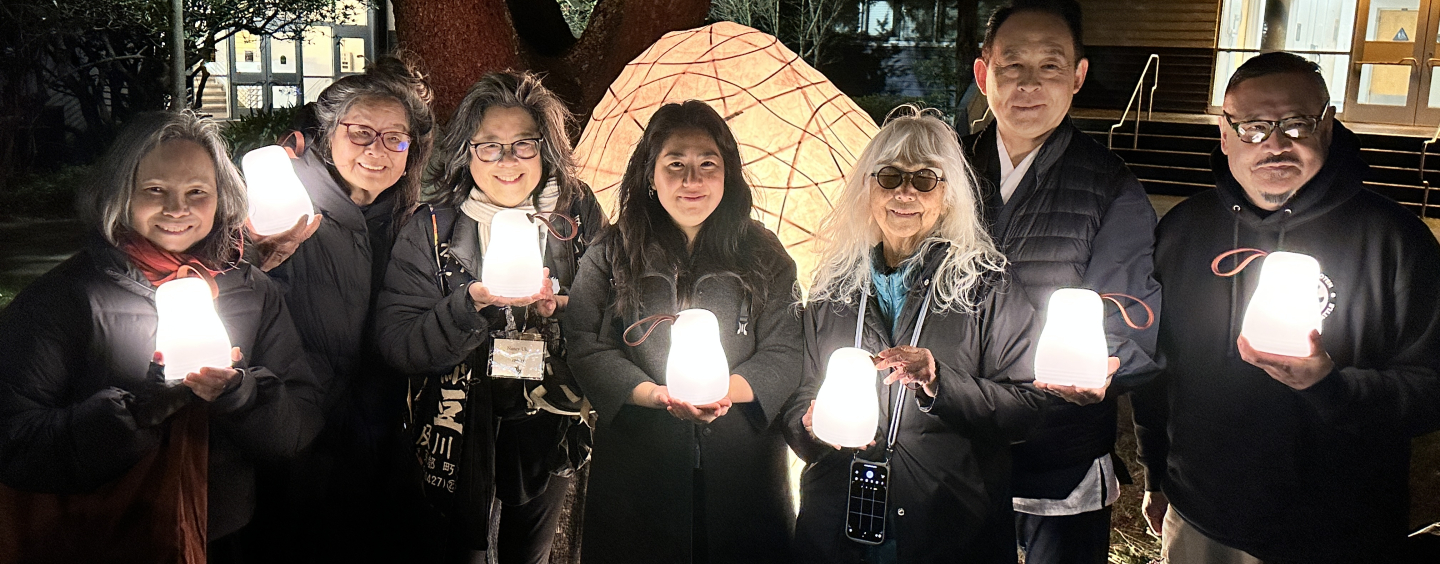
Co-organized by Cassie Miura, inaugural Takahashi Distinguished Chair in Nikkei Studies, the moving commemoration brought together scholarship, art and community memory, reflecting the growing strength of Nikkei Studies at SFSU
On a February evening in SFSU’s Ruth Asawa Garden of Remembrance, students, alumni, descendants, survivors and community members held small illuminated lanterns as they honored 19 Japanese American SFSU students whose education was interrupted by World War II incarceration.
The University’s 2026 Day of Remembrance brought together scholarship, art, ritual and community memory in a moving commemoration hosted by the Edison Uno Initiative for Nikkei and Uchinaanchu Studies and the Department of Asian American Studies. The event reflected the growing strength of Nikkei Studies at SFSU — work advanced in part through the generosity of the Henri and Tomoye Takahashi Charitable Foundation, whose support enabled the hiring of Assistant Professor Cassie Miura as the inaugural Henri and Tomoye Takahashi Distinguished Chair in Nikkei Studies. Although the event itself was not directly funded by the Foundation, its impact was visible in the faculty leadership, community partnerships and public programming made possible through this growing area of study.
Co-organized by Miura, Professor of Asian American Studies Wesley Ueunten and community partner Nancy Ukai, the evening included a screening of DUST, a short film by Glenn Mitsui and Brandon Shimoda; an exhibition of the Wakasa Spirit Stone; and an outdoor ceremony in the Garden of Remembrance. Masako Takahashi, president of the Henri and Tomoye Takahashi Charitable Foundation, collaborated with Miura on the event and helped connect organizers with the Wakasa Memorial Committee to bring the Wakasa Spirit Stone exhibition to campus.
During the ceremony, an original short film by Mitsui and Ukai was projected onto the Wakasa Spirit Stone, featuring the names and photos of the 19 SFSU students incarcerated during the war. As Miura told Golden Gate Xpress, the images helped current students understand that “these were peers, these were individuals who are just like them.”
“These were peers, these were individuals who are just like them.”
—Assistant Professor Cassie Miura, inaugural Henri and Tomoye Takahashi Distinguished Chair in Nikkei Studies
The evening also connected generations of SFSU history. Reverend Michael Endo of the Buddhist Church of Oakland offered a blessing and read each student’s name aloud as 19 small lanterns were illuminated by survivors, descendants, community members and SFSU students. Attendees were invited to offer incense and place flowers before the Wakasa Spirit Stone in quiet gestures of remembrance that connected past and present.
Music was provided by Robert Kikuchi-Yngojo, whose father, John Kikuchi, was one of the 19 students, along with Ueunten on sanshin and Francis Wong on saxophone. Kikuchi-Yngojo wore the SFSU letterman jacket belatedly presented to his father by the University in 1990, a powerful symbol of recognition across time.
The Day of Remembrance offered a meaningful example of how philanthropy can strengthen academic life while deepening the University’s ties to alumni, families and community partners. Nancy Ukai, a community partner and member of the Wakasa Memorial Committee, underscored the importance of remembrance when she told Golden Gate Xpress, “If we don’t have these remembrance days, we will forget things.”
Through support for faculty leadership and community-engaged scholarship, donor generosity helps preserve history, uplift underrepresented stories and create spaces where students and the broader SFSU community can continue learning from the past in pursuit of a more just future.
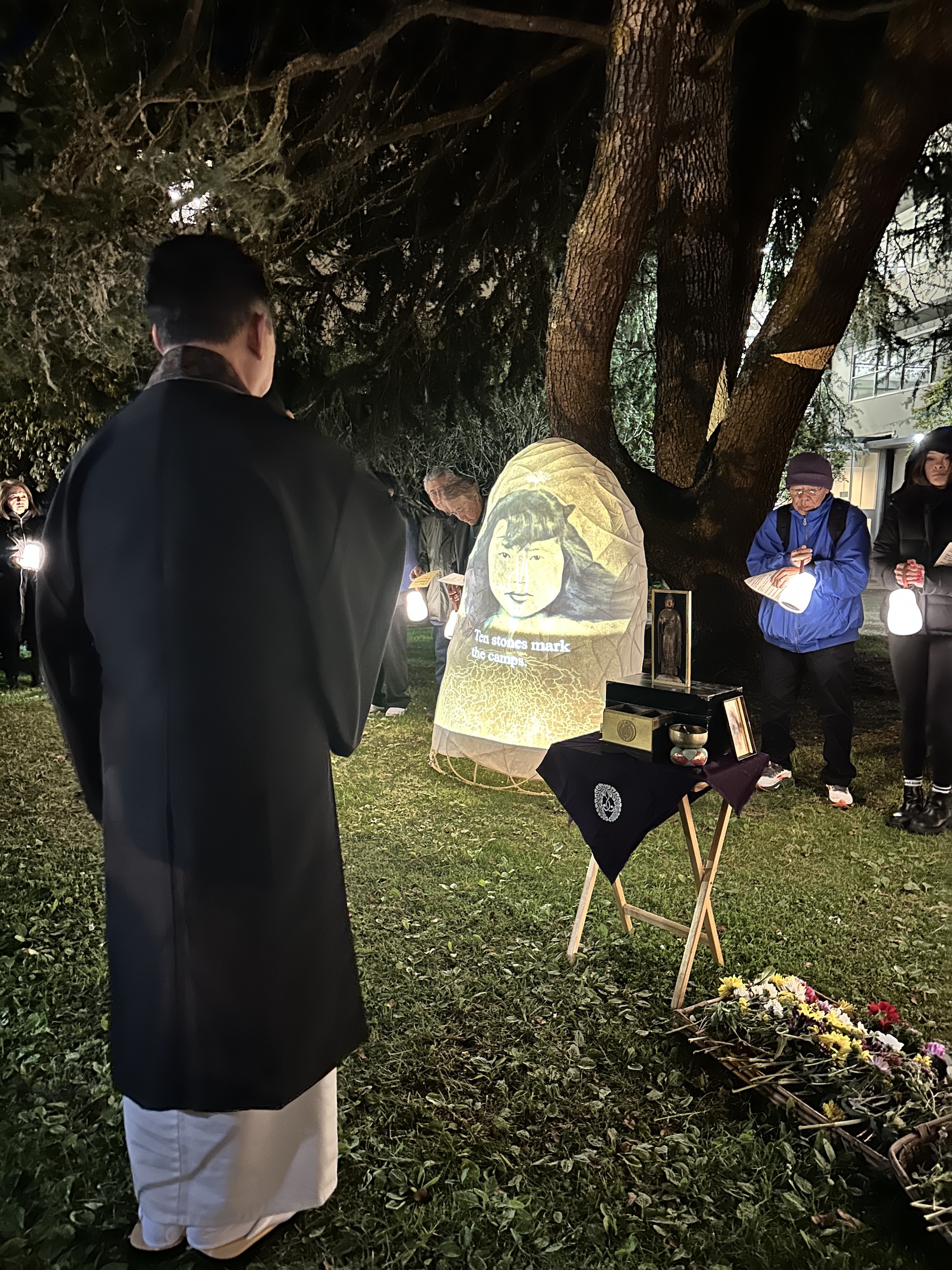
Above: Reverend Michael Endo of the Buddhist Church of Oakland offered a blessing and read each incarcerated SFSU student’s name aloud.
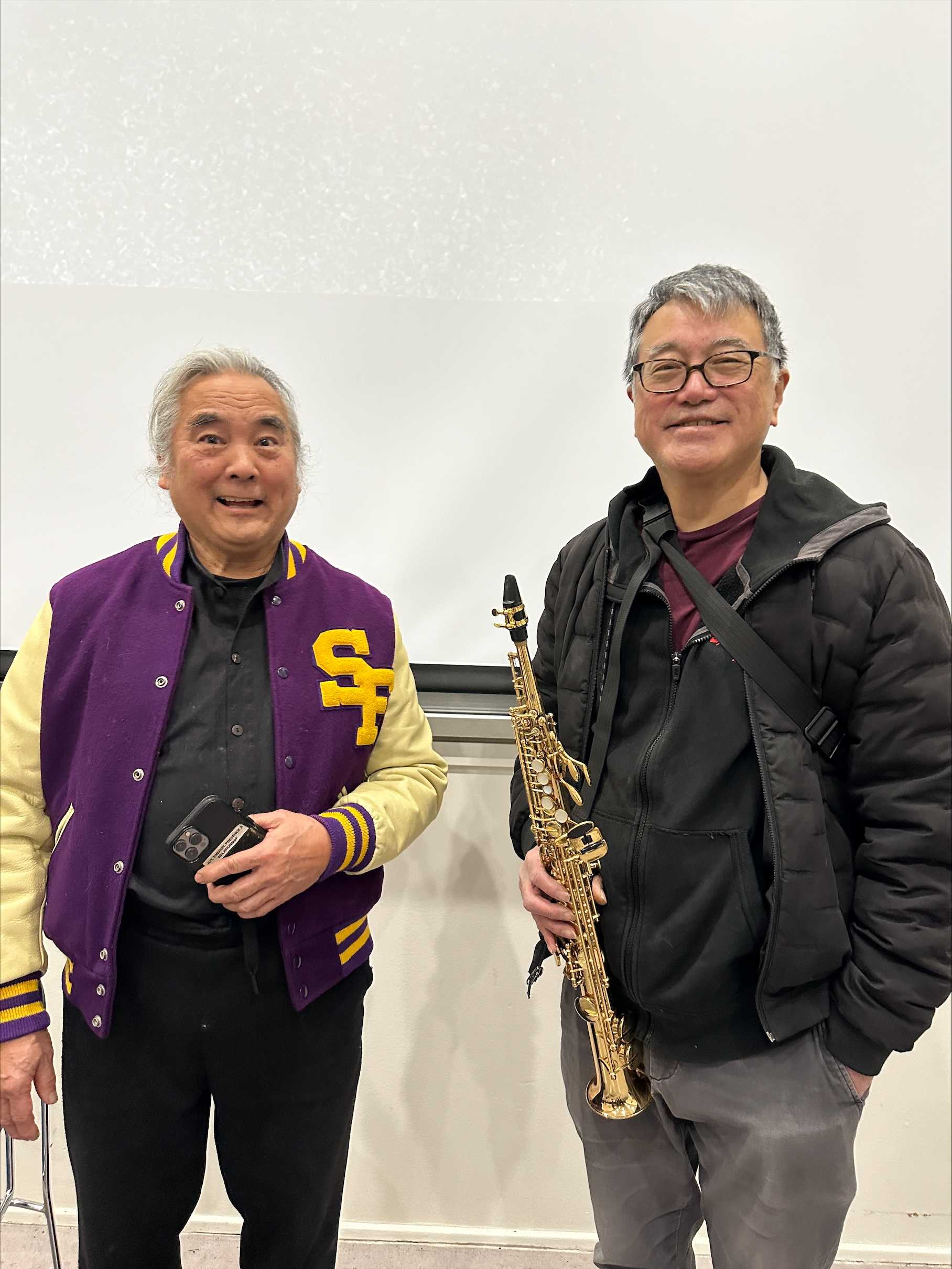
Above at left: Robert Kikuchi-Yngojo, whose father, John Kikuchi, was one of the 19 incarcerated SFSU students. Kikuchi-Yngojo wore the SFSU letterman jacket belatedly presented to his father by the University in 1990.
For more information about donating to the College of Ethnic Studies, contact:
Alex Sánchez
Executive Director of Development
College of Ethnic Studies
(415) 338-1032
Tags
Related News