research

SFSU School of Design Students Take Climate Innovation to Global Stage

With support from donors and partners, SFSU’s Team Urbon presented at the international Biodesign Challenge in New York, proposing a kelp restoration project that combined sustainability, design, and community engagement

With generous financial support from the MillerKnoll Foundation, SFSU’s Institute for Civic and Community Engagement (ICCE) Service Learning Course Development grant, and Richard Ingalls, (B.A., ’66; B.A., ’68; M.A., ’70, Education), a team of SFSU students traveled to New York City this spring to compete in the 2025 Biodesign Challenge (BDC).

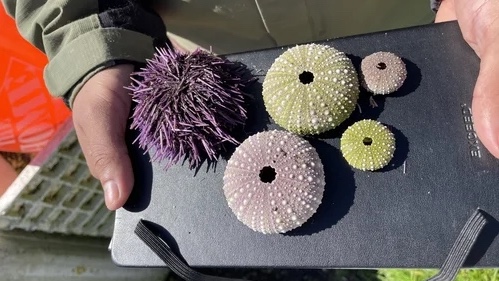
The SFSU team that earned the BDC spot did so through a semester-long effort in Associate Professor Fernando Felicio dos Santos de Carvalho’s “Product Design II” class, dedicated to developing new, sustainable ways to solve a problem on California’s North Coast tinted by climate-change: overpopulated sea urchins that are preying on the bull kelp and destroying the ecosystem.

Funding from the supporters allowed for travel arrangements, fieldtrips, and other events that provided critical learning opportunities for the team, chosen from among eight SFSU competing teams by a juried panel to travel to New York for the competition.

The MillerKnoll Foundation focuses on engaging young people through art and design, promoting equity, and building a sustainable future. These priorities reflect the organization’s deeply held belief in the power of design to transform lives and create lasting impact.

Team Urbon students Huan Chang, Luke Seeley, Xin Zhang, and Elliot Ostergaard showed phenomenal engagement and effort in the weeks leading up to the trip, working on refinements and improvements stemming from the jury panel's comments, producing posters, models, videos, and working on their final live presentation that focused on supporting the recovery of Northern California’s bull kelp forests. The team collaborated on the project with The Nature Conservancy, the Noyo Center for Marin Science, and Above/Below, bringing real-world relevance to the endeavor.

While in New York, the students were professional, involved, effective, and enthusiastic as they delivered stellar presentations, representing SFSU with pride on an international stage, said Carvalho, who teaches courses in SFSU’s School of Design within the College of Liberal and Creative Arts.
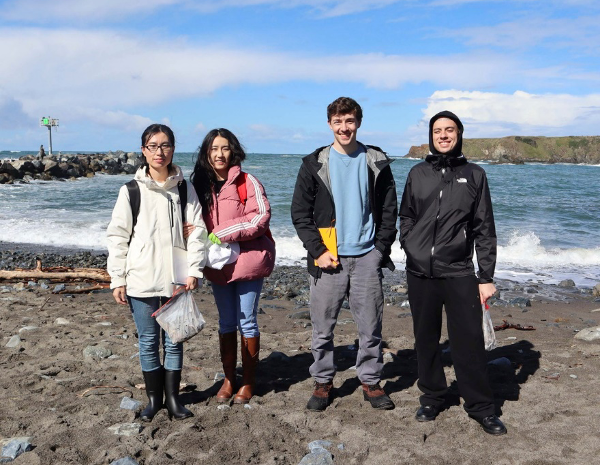
Urbon team during fieldtrip at Noyo Beach, in Fort Bragg, California. From left to right, SFSU design students, Huan Chang, Xin Zhang, Luke Seeley, and  Elliot Ostergaard).

Team Urbon during a field trip at Noyo Beach, in Fort Bragg, California. From left to right: SFSU design students Huan Chang, Xin Zhang, Luke Seeley, and Elliot Ostergaard.
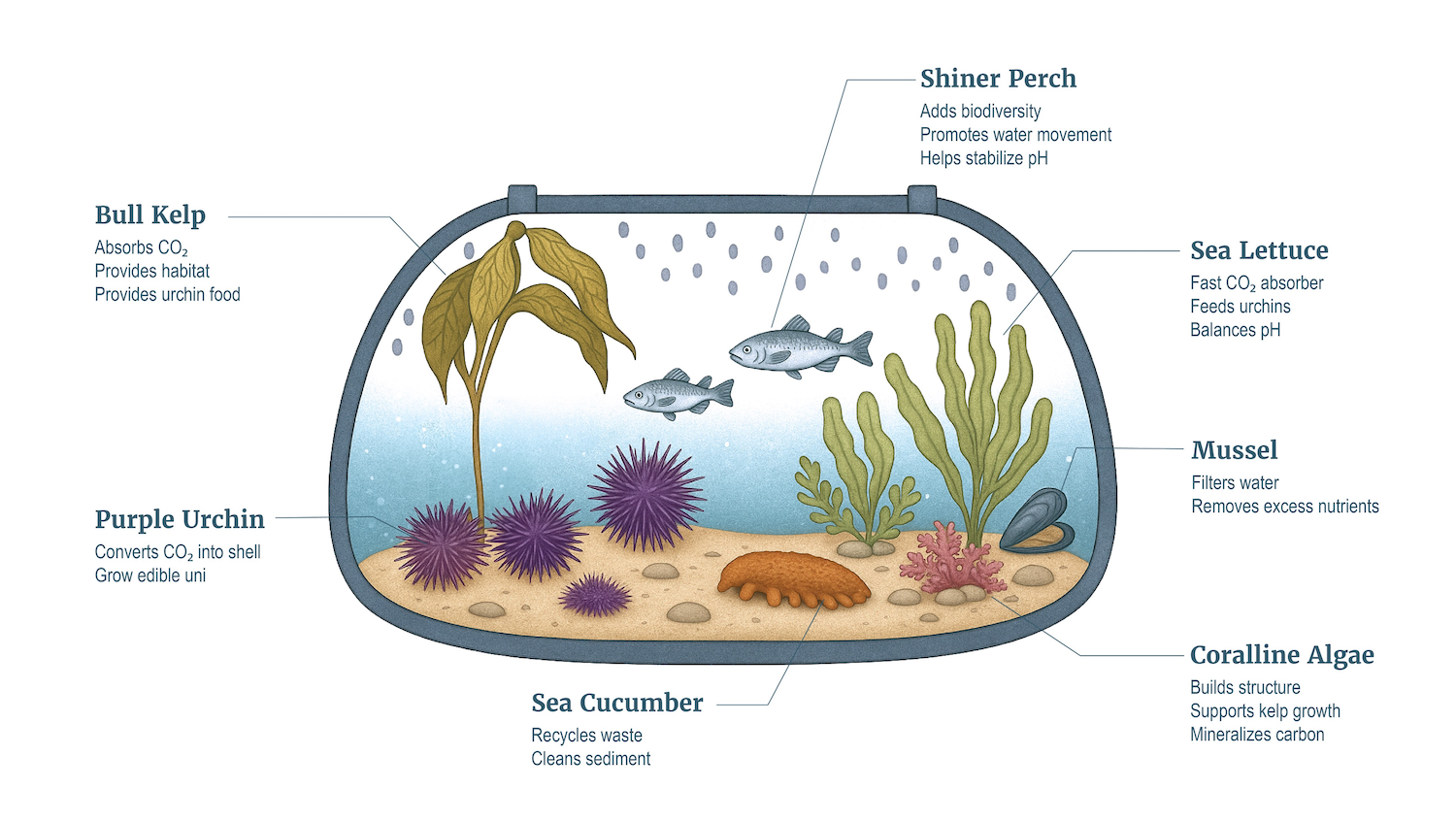
Team Urbon biodesign project image

Above: Some of Team Urbon's biodesign project images

“The awards, grants, and donations we received were fundamental in a number of complementary ways,” said Carvalho. “For example, covering our registration fee to participate in the competition and the costs associated with fieldwork, which entailed taking 33 students and two faculty to site visits in Mendocino and Fort Bragg, including the Kelp Restoration site, the Noyo Center for Marine Science, and the Mendocino Art Center. Importantly, the funds also made it possible for us to pay for transportation and accommodation of four students and two faculty attending the Biodesign Challenge competition in New York this past summer.”

“The awards, grants, and donations we received were fundamental.” 


—Associate Professor Fernando Felicio dos Santos de Carvalho, SFSU School of Design

Carvalho was also quick to call attention to lecturer Josie Iselin, referring to her as a fundamental piece of all the effort who has been with him on this journey to the BDC since before the spring semester.

“Josie was the one making the connection with the Nature Conservancy in order to provide the class program with a focused topic,” Carvalho said. “She was also instrumental in facilitating the field trip activities, and supporting our students in New York City with me. I wish to acknowledge her invaluable, critical contributions.”

SFSU’s team included students who had never been to New York and had never participated in an international design event such as the Biodesign Challenge that gathered more than 40 teams from across the globe.

“This was, and is every year, a unique experience that significantly widens the perspectives of our students while providing them with a degree of confidence that comes with presenting to professional jurors, side by side with the best design schools in the world,” said Carvalho.

“This was, and is every year, a unique experience that significantly widens the perspectives of our students while providing them with a degree of confidence that comes with presenting to professional jurors, side by side with the best design schools in the world.” 


—Associate Professor Fernando Felicio dos Santos de Carvalho, SFSU School of Design
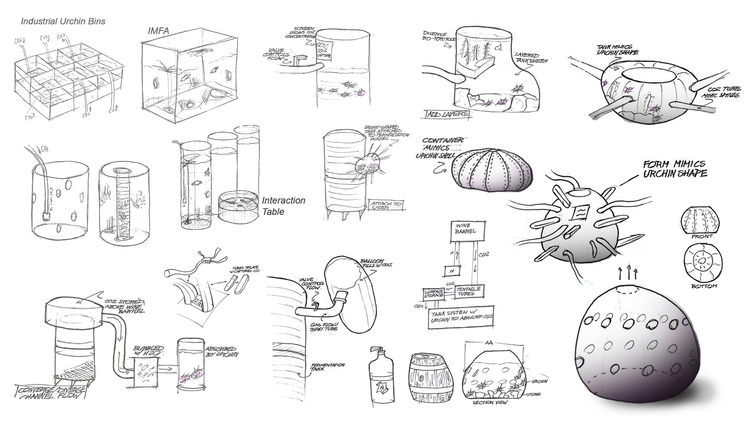
Team Urbon biodesign project image

Above and below: Biodesign project images from Team Urbon
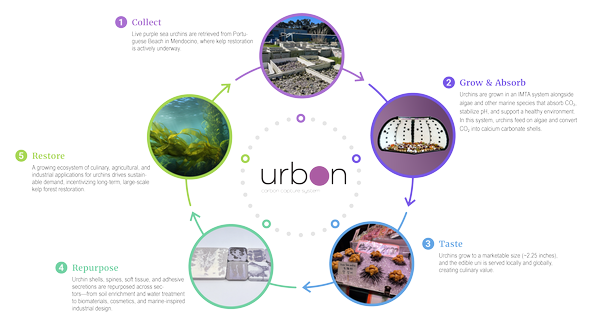
Team Urbon biodesign project image

The BDC is a global, interdisciplinary education program and competition that invites students to explore the convergence of art, design, and biotechnology. Founded on the belief that scientific progress is enriched by creative vision, the event empowers participants to imagine more equitable and sustainable futures through the lens of emerging technologies.

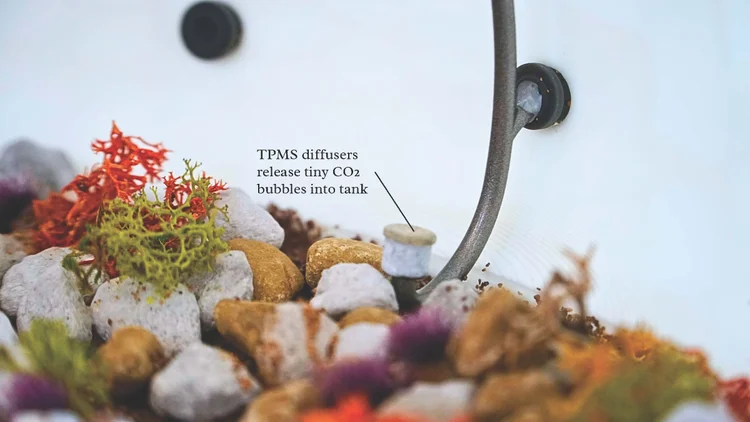
Team Urbon’s approach employed living organisms that convert CO2 emissions in food resources and living structures, helping industries and society to envision a synergistic path to a more sustainable future, while supporting bull kelp restoration efforts through grazer suppression, public awareness, and local community engagement.

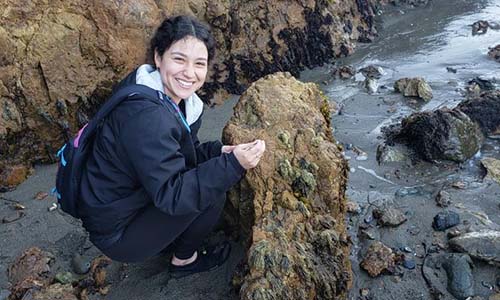
SFSU’s competing teams leading up to the BDC worked from the cutting-edge research and ongoing restoration efforts of the Nature Conservancy, led by marine biologist Tristin McHugh, to understand the relationships between the main organisms involved in the coastal ecosystem of Mendocino and Fort Bragg, to then explore, experiment, and design solutions that would contribute to the current bull kelp recovery work.

Click on the video below to learn more about Team Urbon's project, a Biodesign Challenge finalist:

For more information about donating to the College of Liberal & Creative Arts, contact:

Soo Kim

Senior Director of Development (Creative Arts)

College of Liberal and Creative Arts

soo.kim@sfsu.edu

(415) 338-7113

Read more about Soo

Kenneth S. Fong (B.A., ’71; M.A., ’74), Ph.D.: Inspiring Discovery, Innovation, and Opportunity

From founding biotech companies to endowing transformative research awards, Kenneth S. Fong (B.A., ’71; M.A., ’74), Ph.D., has advanced science, entrepreneurship, and education at SFSU — including a pivotal gift to the new Science & Engineering Innovation Center

In early September, SFSU hosted the Fong Research Award Symposium to highlight the Kenneth S. Fong Translational Research Award, which funds cross-disciplinary faculty projects advancing real-world solutions. When Kenneth S. Fong (B.A., Clinical/Biomedical Science, ’71; M.A., Microbiology, ’74), Ph.D., reflects on his remarkable career in biotechnology, he traces it back to a single class at San Francisco State University.

“My passion for science began at San Francisco State University in 1970, when I took a molecular biology course taught by Dr. Sarane Bowen,” Fong recalls. “That class sparked my fascination with DNA and RNA and their essential roles in the life of cells.”

That spark led Fong to pursue a Ph.D. at Indiana University and postdoctoral research at UCLA and the National Institutes of Health. In 1984, he founded Clontech Laboratories. “What began in the classroom at SFSU became the foundation for a company that grew to nearly 400 employees over 15 years,” he says. Clontech rose to become one of the largest biomedical tool companies founded by an Asian American in the U.S. before its acquisition by Becton Dickinson in 1999. Fong later launched Kenson Ventures, LLC, a Silicon Valley–based venture capital firm that has invested in and mentored numerous biotech companies through IPOs and acquisitions.

Reflecting on his career, Fong says, “I have come to value sustainability and continuity — principles that guide both my professional endeavors and my contributions to the scientific community.” These principles, together with his gratitude for the opportunities afforded by his education in the U.S. as an immigrant from Hong Kong, continue to inspire his deep connection to SFSU. Over the years, he has given generously of his time, expertise, and philanthropy.

“My passion for science began at San Francisco State University in 1970, when I took a molecular biology course taught by Dr. Sarane Bowen. That class sparked my fascination with DNA and RNA and their essential roles in the life of cells.”  
—Kenneth S. Fong (B.A., ’71; M.A., ’74), Ph.D.

In 2014, he endowed the Kenneth S. Fong Translational Research Award at SFSU, designed to support faculty and student collaborations and innovation in perpetuity. “By generating discoveries that can attract funding from NIH, NSF, and other sources,” Fong says, “the program creates a self-sustaining cycle of research, innovation, and impact.”

Since its launch, the award has funded 11 interdisciplinary projects, engaging 27 faculty and 75 students. These projects have spanned fields as diverse as biomedical engineering, chemistry, biology, physics, and computer science — from robotic exoskeletons for stroke rehabilitation, to breast cancer treatments using diverse ancestry cell lines, to advances in prosthetic arm technology. Collectively, the research has secured more than $21 million in additional funding from national agencies including the NIH, NSF, NASA, and the Department of Defense.

For SFSU student research assistant Charlie Vidal Sanchez (B.S., Civil Engineering, ’20; M.S., Structural & Earthquake Engineering, ’21), the support was life-changing. “It was at SFSU that I saw all the doors open for me where they were once closed, potential seen in me when there was once none, and where I took advantage of every opportunity I could,” he says. With the confidence and experience gained from his participation in Fong-supported research, Charlie went on to win first place in the CSU Research Competition, earn a master’s degree through SFSU’s accelerated program, and launch his own construction company. 

“It was at SFSU that I saw all the doors open for me where they were once closed, potential seen in me when there was once none, and where I took advantage of every opportunity I could.”  
—Charlie Vidal Sanchez (B.S., Civil Engineering, ’20; M.S., Structural & Earthquake Engineering, ’21), who assisted with Fong-awarded research as an SFSU student

Kenneth S. Fong (B.A., ’71; M.A., ’74), Ph.D.

Kenneth S. Fong (B.A., ’71; M.A., ’74), Ph.D.

Dr. Fong speaks at the Ken Fong Research Award Symposium

Dr. Fong speaks at the Ken Fong Research Award Symposium

Ken Fong Award Symposium

Above: Research presentations at the Kenneth S. Fong Translational Research Award Symposium

Ken Fong Award Symposium

Fong’s impact also extends into the heart of campus innovation. Most recently, he became the largest individual donor to the new Science & Engineering Innovation Center (SEIC), playing a pivotal role in creating the 125,000-square-foot hub that “puts science on display” with state-of-the-art labs, classrooms, and collaboration. Opened in 2024, SEIC is home to the Department of Chemistry & Biochemistry and the School of Engineering. The building serves more than 7,000 students in the College of Science & Engineering with studio labs, robotics facilities, makerspaces, energy systems labs, and a student success center. Through Fong’s philanthropy, SEIC empowers faculty, trains students, and advances biotechnology and research at SFSU — aligning with his goal of cultivating a new generation of entrepreneurs and visionary researchers.

“By generating discoveries that can attract funding from NIH, NSF, and other sources, the program creates a self-sustaining cycle of research, innovation, and impact.” 
—Kenneth S. Fong (B.A., ’71; M.A., ’74), Ph.D., about the Fong Research Award

From his beginnings as a curious biology student in the 1970s to his role today as an entrepreneur and philanthropist, Kenneth S. Fong’s legacy at SFSU is one of discovery and innovation. Through his generosity — grounded in gratitude and shaped by his own journey — he has built lasting infrastructure and opportunities, sustaining a cycle of exploration, learning, collaboration, and impact that will continue for generations.


For more information about donating to the College of Science & Engineering, contact:

Holly Fincke

Senior Director of Development

College of Science & Engineering

hollyfincke@sfsu.edu

(415) 338-7118

Read more about Holly

Rising star: University researcher Berenice Baca achieves firsts in sea star research

With faculty support, a scholarship award-winning student expands class project into a graduate research project

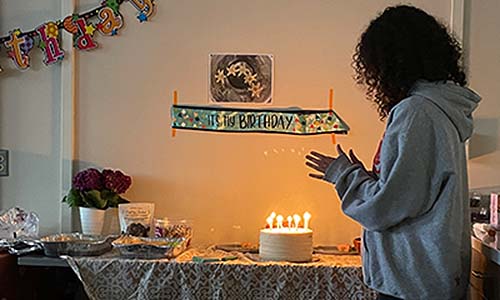
It’s not often that one gets to throw starfish a birthday party. Some species — like the six-rayed sea star Leptasterias — are notoriously difficult to keep alive in the lab, making even first birthdays a rarity. So when San Francisco State University researcher Berenice Baca achieved the seemingly impossible feat of raising Leptasterias specimens for an entire year, her lab made sure to celebrate.

Baca is among the first in her field to successfully rear Leptasterias embryos to reach the one-year milestone in the lab. And to think, this project started in an undergraduate class with San Francisco State Biology Professor Sarah Cohen.

“Because of that study I started as an undergrad, I was able to grow [Leptasterias] up to a year, which is really exciting,” said Baca, who joined Cohen’s lab as an undergraduate researcher and is now an SF State master’s student. She’s been with this project for less than two years but she’s already shared her work at national and international conferences, won research awards, attended research workshops and worked with KQED to highlight these sea stars.

Baca’s work could help Leptasterias and other species feeling the impact of grave challenges. Sea stars face the constant threats of climate change and sea star wasting disease, a mysterious condition wiping out entire species. “We tend to notice or shift our attention towards certain species when it’s endangered or almost gone,” Baca explained. “We should try to address [these issues] now rather than wait until the species is almost completely gone.”

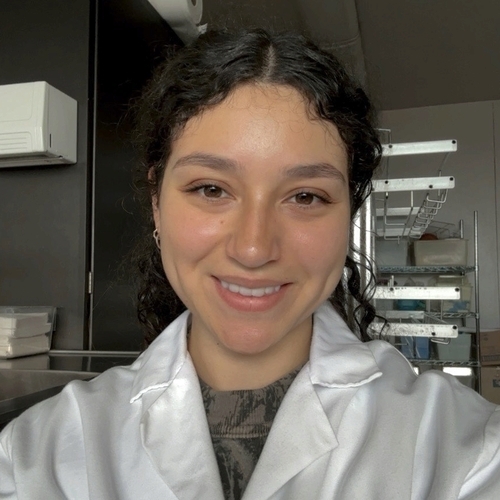
Headshot of SF State student researcher Berenice Baca
SF State student researcher Berenice Baca

Berenice Baca

Happy birthday, dear Leptasterias

Baca studies the developmental patterns of two species of Leptasterias sea stars (Leptasterias pusilla and Leptasterias aequalis). These species reproduce via brood-fostering, which is akin to a hen sitting on her eggs. While somewhat common among other animals, it’s a rare approach among marine species. In the wild, maternal sea stars protect 50 – 1,500 embryos on their underside until their young stars are ready to be independent. Baca successfully raised these embryos to a juvenile stage in the lab without maternal care (i.e., without brooding). As part of this project, she developed protocols for this process and gleaned unique insight about Leptasterias development.

“As I was starting this project, I realized there’s no information on this, which drove me a little crazy,” Baca said, noting that the knowledge gap fueled her curiosity and determination.

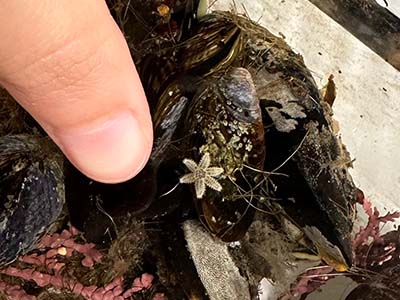
Her first step was to give the sea stars a laboratory home as cold as their native habitat. Baca first raised the stars at 9 to 10 degrees Celsius in a classroom cold room before moving them to a dedicated deli fridge set at 12 to 13 degrees Celsius. Next, she needed to ensure that the stars didn’t starve. This was quite the saga, Baca explains, because the stars kept losing interest in readily available fish food. It turned out Baca’s microscopic juvenile starfish — approximately 0.2 cm in size — required live sea snails, copepods and barnacles they could hunt.

“I ended up getting these microscopic snails that required really fine tweezers to get them out of barnacles. I was doing this at 5 in the morning or very late at night because I have to correlate [my work] with the tides,” she explained.

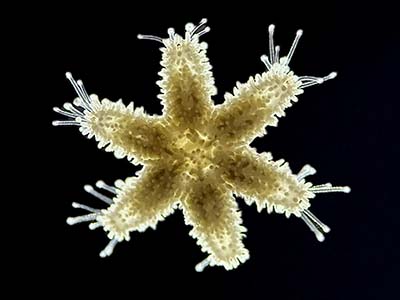
six-rayed sea star Leptasterias

Juvenile Leptasterias less than 2 cm in size.

six-rayed sea star Leptasterias

Sea star next to a finger for scale.

six-rayed sea star Leptasterias

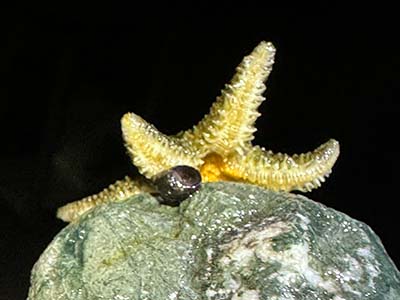
Sea star hunting a sea snail.

Comparable studies on Leptasterias failed to grow the early juveniles in the lab and only one known study was able to hatch these stars. Extending Leptasterias’ lifespan in the lab gave Baca the opportunity to document their development as early as eight hours to 31 days, allowing her to capture beautiful images of fertilized eggs and snapshots of intermediate stages. By day 44, her juvenile stars began taking on a familiar six-armed star shape, and by 10 months the stars were 1.3 cm or bigger and started exhibiting hallmark coloration and patterns. Sharing her work at conferences, she was heartened to hear other scientists share excitement for her work and give her words of encouragement.

Baca and the Cohen lab even worked with KQED to feature Leptasterias in a new episode of its science video series “Deep Look,” presented by PBS Digital Studios. Scroll to the end of this story to see the video, which has nearly a quarter-million views on YouTube. 

Growing up alongside her stars

Coming to SF State, Baca knew she wanted to do research, but she’s still a bit awestruck by how her research experience has evolved. When she enrolled in Cohen’s “BIOL 586GW: Marine Ecology Laboratory — GWAR,” Baca wanted research experience, but she didn’t anticipate it would lead her to pursue a master’s degree.

“It’s really nice that Sarah [Cohen] is really good at figuring out your interest and connecting you with the right people,” Baca said, explaining that Cohen encouraged her to apply for grants and scholarships, participate in conferences and attend science workshops.

Happy birthday cake and candles for the six-rayed sea star Leptasterias

Baca’s honors included the Achievement Reward for College Scientists (ARCS), Step to College and University scholarships. “That really helps. Sometimes you feel lost and having that [support] really helps in initiating your own project or research. It actually makes you feel like a scientist.”

With daily lab work, field research and conferences, being a scientist has become a big part of her life. Baca, a first-generation student, previously maintained multiple jobs and worked full-time in the fields picking blueberries and grapes to support her University education. Growing up in a small town that lacked proper science education, she had an unsatisfied desire to learn more. It’s that natural and unwavering curiosity that’s driven her throughout her research, especially when it gets hard.

“I’m really thankful for the entire Cohen lab,” Baca said, adding that Cohen’s and her lab mates’ support and encouragement have been instrumental. “I believe without them I wouldn’t have anything.”

For more information about donating to the College of Science & Engineering, contact 
Holly Fincke at hollyfincke@sfsu.edu