students

SFSU School of Design Students Take Climate Innovation to Global Stage

With support from donors and partners, SFSU’s Team Urbon presented at the international Biodesign Challenge in New York, proposing a kelp restoration project that combined sustainability, design, and community engagement

With generous financial support from the MillerKnoll Foundation, SFSU’s Institute for Civic and Community Engagement (ICCE) Service Learning Course Development grant, and Richard Ingalls, (B.A., ’66; B.A., ’68; M.A., ’70, Education), a team of SFSU students traveled to New York City this spring to compete in the 2025 Biodesign Challenge (BDC).

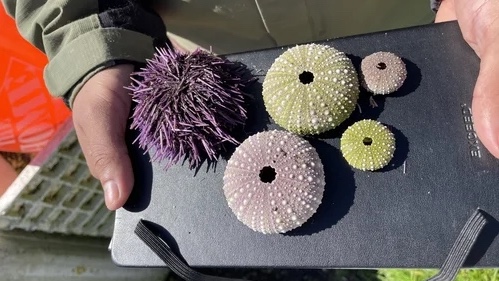
The SFSU team that earned the BDC spot did so through a semester-long effort in Associate Professor Fernando Felicio dos Santos de Carvalho’s “Product Design II” class, dedicated to developing new, sustainable ways to solve a problem on California’s North Coast tinted by climate-change: overpopulated sea urchins that are preying on the bull kelp and destroying the ecosystem.

Funding from the supporters allowed for travel arrangements, fieldtrips, and other events that provided critical learning opportunities for the team, chosen from among eight SFSU competing teams by a juried panel to travel to New York for the competition.

The MillerKnoll Foundation focuses on engaging young people through art and design, promoting equity, and building a sustainable future. These priorities reflect the organization’s deeply held belief in the power of design to transform lives and create lasting impact.

Team Urbon students Huan Chang, Luke Seeley, Xin Zhang, and Elliot Ostergaard showed phenomenal engagement and effort in the weeks leading up to the trip, working on refinements and improvements stemming from the jury panel's comments, producing posters, models, videos, and working on their final live presentation that focused on supporting the recovery of Northern California’s bull kelp forests. The team collaborated on the project with The Nature Conservancy, the Noyo Center for Marin Science, and Above/Below, bringing real-world relevance to the endeavor.

While in New York, the students were professional, involved, effective, and enthusiastic as they delivered stellar presentations, representing SFSU with pride on an international stage, said Carvalho, who teaches courses in SFSU’s School of Design within the College of Liberal and Creative Arts.
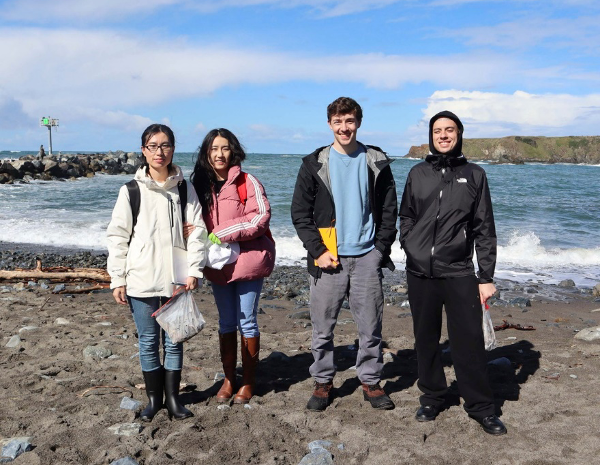
Urbon team during fieldtrip at Noyo Beach, in Fort Bragg, California. From left to right, SFSU design students, Huan Chang, Xin Zhang, Luke Seeley, and  Elliot Ostergaard).

Team Urbon during a field trip at Noyo Beach, in Fort Bragg, California. From left to right: SFSU design students Huan Chang, Xin Zhang, Luke Seeley, and Elliot Ostergaard.
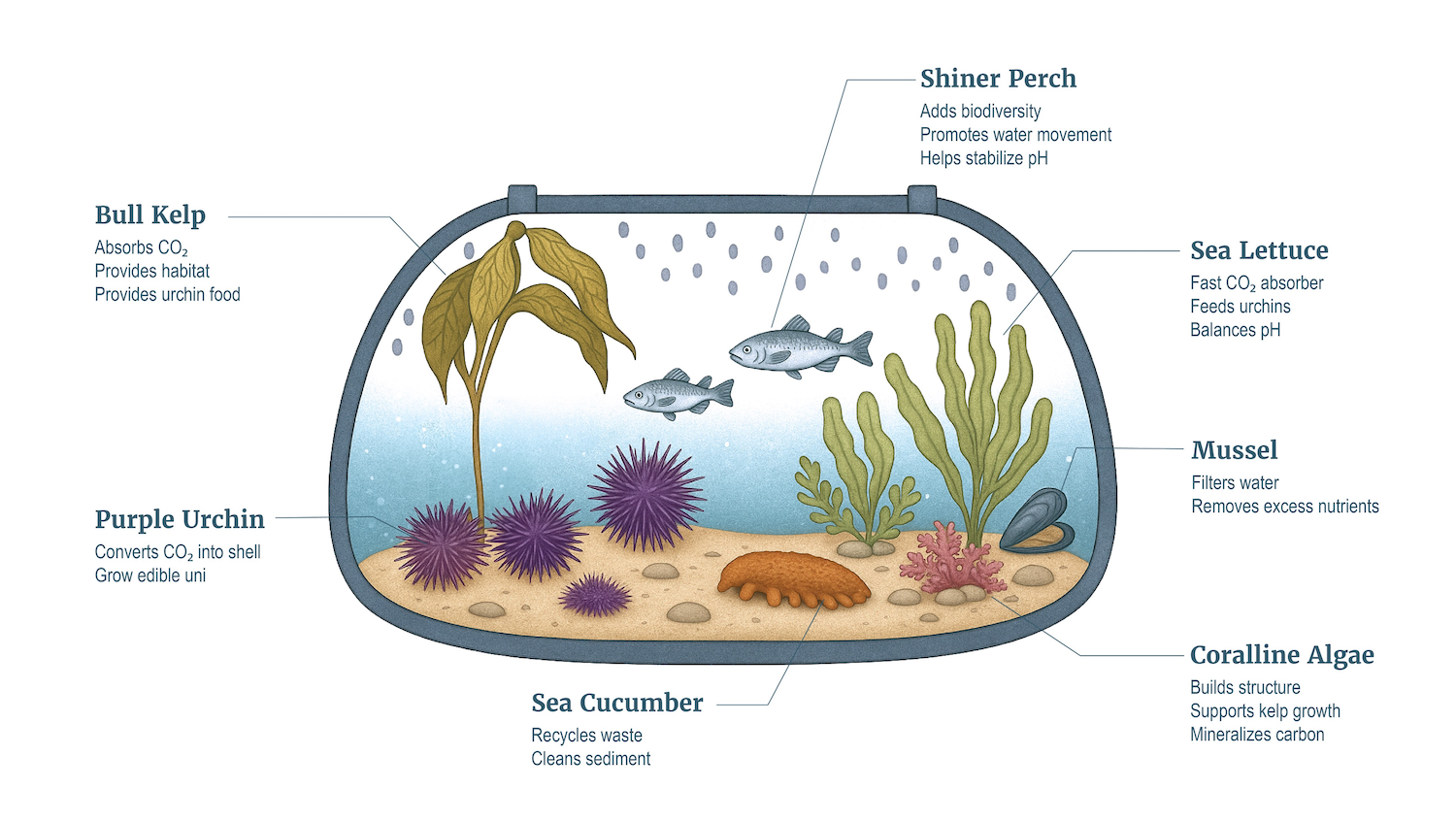
Team Urbon biodesign project image

Above: Some of Team Urbon's biodesign project images

“The awards, grants, and donations we received were fundamental in a number of complementary ways,” said Carvalho. “For example, covering our registration fee to participate in the competition and the costs associated with fieldwork, which entailed taking 33 students and two faculty to site visits in Mendocino and Fort Bragg, including the Kelp Restoration site, the Noyo Center for Marine Science, and the Mendocino Art Center. Importantly, the funds also made it possible for us to pay for transportation and accommodation of four students and two faculty attending the Biodesign Challenge competition in New York this past summer.”

“The awards, grants, and donations we received were fundamental.” 


—Associate Professor Fernando Felicio dos Santos de Carvalho, SFSU School of Design

Carvalho was also quick to call attention to lecturer Josie Iselin, referring to her as a fundamental piece of all the effort who has been with him on this journey to the BDC since before the spring semester.

“Josie was the one making the connection with the Nature Conservancy in order to provide the class program with a focused topic,” Carvalho said. “She was also instrumental in facilitating the field trip activities, and supporting our students in New York City with me. I wish to acknowledge her invaluable, critical contributions.”

SFSU’s team included students who had never been to New York and had never participated in an international design event such as the Biodesign Challenge that gathered more than 40 teams from across the globe.

“This was, and is every year, a unique experience that significantly widens the perspectives of our students while providing them with a degree of confidence that comes with presenting to professional jurors, side by side with the best design schools in the world,” said Carvalho.

“This was, and is every year, a unique experience that significantly widens the perspectives of our students while providing them with a degree of confidence that comes with presenting to professional jurors, side by side with the best design schools in the world.” 


—Associate Professor Fernando Felicio dos Santos de Carvalho, SFSU School of Design
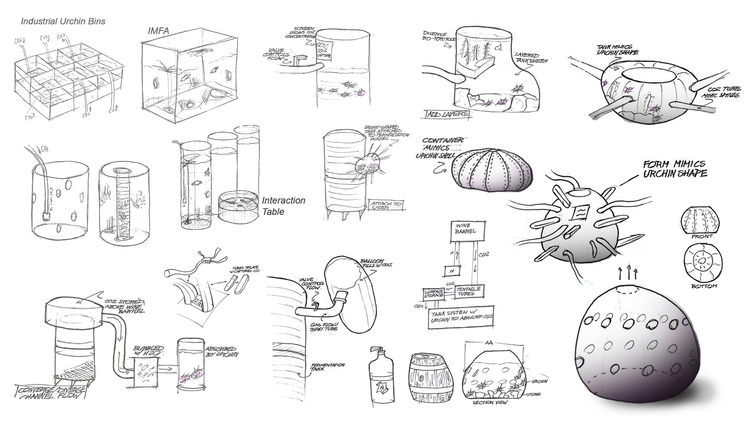
Team Urbon biodesign project image

Above and below: Biodesign project images from Team Urbon
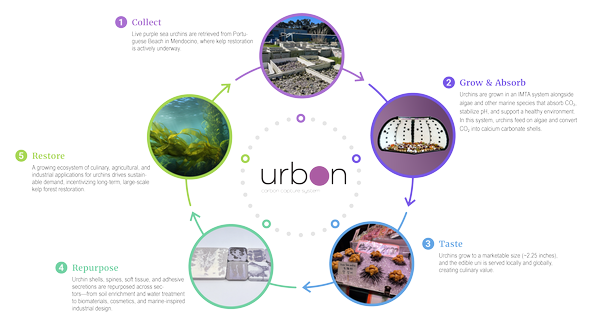
Team Urbon biodesign project image

The BDC is a global, interdisciplinary education program and competition that invites students to explore the convergence of art, design, and biotechnology. Founded on the belief that scientific progress is enriched by creative vision, the event empowers participants to imagine more equitable and sustainable futures through the lens of emerging technologies.

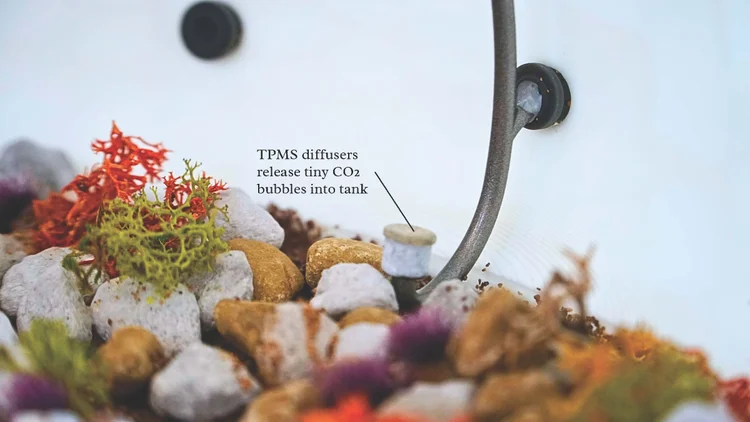
Team Urbon’s approach employed living organisms that convert CO2 emissions in food resources and living structures, helping industries and society to envision a synergistic path to a more sustainable future, while supporting bull kelp restoration efforts through grazer suppression, public awareness, and local community engagement.

SFSU’s competing teams leading up to the BDC worked from the cutting-edge research and ongoing restoration efforts of the Nature Conservancy, led by marine biologist Tristin McHugh, to understand the relationships between the main organisms involved in the coastal ecosystem of Mendocino and Fort Bragg, to then explore, experiment, and design solutions that would contribute to the current bull kelp recovery work.

Click on the video below to learn more about Team Urbon's project, a Biodesign Challenge finalist:

For more information about donating to the College of Liberal & Creative Arts, contact:

Soo Kim

Senior Director of Development (Creative Arts)

College of Liberal and Creative Arts

soo.kim@sfsu.edu

(415) 338-7113

Read more about Soo

Angela Tafur, First Kirkeberg Scholar, Leads with Purpose

Angela Tafur, a geography major inspired by her Peruvian heritage, is the inaugural recipient of the Max Kirkeberg Scholarship and is expanding access to outdoor education and environmental justice at San Francisco State University

Fueled by the deep roots of her Peruvian parents who emigrated to the Bay Area and who taught her the value of connectedness to the environment, Angela Tafur is on a clear path to making her dream of community service a reality.

A native of Hayward who grew up in Castro Valley and is now a geography major at SFSU, Angela knew even before she went to college that she wanted to devote her professional energies to improving communities. As the first recipient of the Max Kirkeberg Scholarship, she is well on her way to making her mark in the lives of others, connecting them to and drawing strength and connectedness from the environment.

“I believe my deep interest in ecosystems was shaped early on by my parents’ influence,” says Angela. “As Peruvians, their connection to the natural world is rooted in a culture where nature and daily life are deeply intertwined — especially given Peru's diverse geography and rich array of ecosystems.

“My father is from the northern Peruvian Amazon, from a small town called Huambo, located about two hours from the culturally significant Andean town of Chachapoyas. Growing up, he would often share his extensive knowledge of local birds and plants with me, sparking my curiosity and appreciation for biodiversity,” Angela says. “He always referred to other living beings as if they were relatives or other people. My perspective and passion for the environment has been shaped by the traditional ways of life that my dad lived through and that long defined this region.”

"Growing up in the Bay Area, I carried with me stories from my family that instilled a deep connection to nature.” 
—Angela Tafur

Anegla’s mother grew up in the bustling capital of Lima, but became familiar with many Peruvian cultural nature stories and medicinal plant knowledge that she passed on to Angela.

“Growing up in the Bay Area, I carried with me stories from my family that instilled a deep connection to nature,” says Angela. “However, I quickly realized that the way people engaged with the outdoors in California — through camping, summer camps, or scouting — was very different from my family's perception or experiences with nature. As immigrants, neither of my parents were familiar with these modes of outdoor recreation.”

Angela recalls a special moment outdoors with her father that instilled a deep connection to nature. “I’ll never forget the moment my father tearfully hugged a redwood tree in Reinhardt Redwood Regional Park, in awe of its beauty and gratitude for its existence amidst historic loggings in the area,” she says. “Experiences like this made me reflect on how culture, background, and access shape our relationships with nature and the area that we visit or reside in.”

SFSU student Angela Tafur with her parents

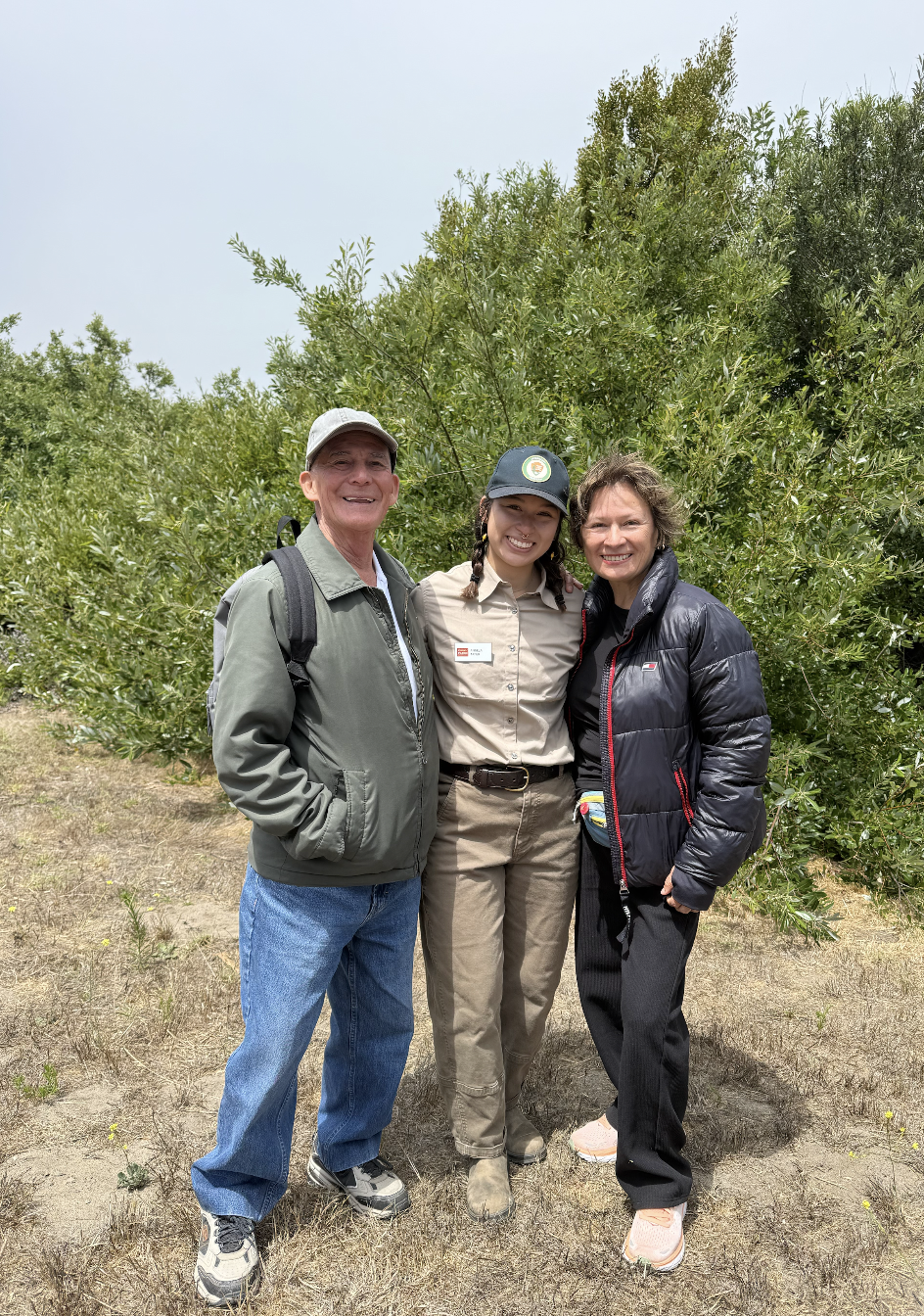
Angela Tafur with her parents, Jose and Carmen Tafur

“I believe my deep interest in ecosystems was shaped early on by my parents’ influence. As Peruvians, their connection to the natural world is rooted in a culture where nature and daily life are deeply intertwined — especially given Peru's diverse geography and rich array of ecosystems.”
—Angela Tafur

Angela is focused on expanding environmental knowledge and increasing access to outdoor spaces. She describes these as a personal and professional calling. “I’ve experienced firsthand how nature can be a source of profound healing — helping me navigate my disability (PTSD), process trauma, and build an intimate, restorative relationship with the world around me. Spending time in outdoor spaces has also allowed me to explore and connect with my mestiza identity and indigenous Peruvian ancestry. As I have learned about the complex histories of the natural spaces I visit, I continue to reflect on how colonialism has distanced me from my ancestral language, Quechua, and from ways of life connected with nature. Being in these landscapes feels like coming back home.”

Angela is currently the president of the Sierra Nevada Alliance of Gators (SNAG), a student organization that builds community through nature and advocates for continued access to SFSU’s Sierra Nevada Field Campus (SNFC), where she fundraises efforts to help students overcome financial barriers to attend. She also works as an outdoor trip leader and is a student manager for the Gator Outdoor Adventure (GOA) program, a branch of Campus Recreation at the Mashouf Wellness Center that provides accessible hiking, backpacking, camping, and climbing trips for students, faculty, and alumni. Notably, the “Gator Wild” program led by GOA was Angela’s first experience with camping and backpacking, as well as her introduction to the SNFC, a research and education field station dedicated to building inclusive community around teaching and learning in the natural sciences, land management, art, music, and culture, offering workshops, classes, and a home base for research at nearby field sites. SNFC’s reach extends beyond the SFSU community, serving as a research and education resource for the local communities of the northern Sierra Nevada, the general public of California, and beyond. 

“I’ve experienced firsthand how nature can be a source of profound healing — helping me navigate my disability (PTSD), process trauma, and build an intimate, restorative relationship with the world around me. Spending time in outdoor spaces has also allowed me to explore and connect with my mestiza identity and indigenous Peruvian ancestry.” 
—Angela Tafur

With transportation being a challenge for SFSU students to access the field campus and other outdoor spaces, Angela utilized her roles within SNAG and GOA to organize various low- and no-cost trips and public transit trips to SNFC and various National Park sites, California State Park sites, and regional parks; showing students that accessing the outdoors without a car is not only possible but empowering. “Having seen and experienced the transformative impact of outdoor programs firsthand, I now want to help others find that connection,” Angela said. 

“I consider the work that I do a daily offering for the earth and environment around me. In highland Quechua cultures of Peru, making offerings to the Earth, known as Pachamama, is a deeply rooted indigenous tradition. It is more than just a career, it is a service I have dedicated myself to being a part of the interconnected, beautiful world that gives all of us water, sun, fire, earth, food, air. The least I can do is to give back for how the earth continues to take care of me, mirroring reciprocal and balanced relationships found across nature,” Angela says.

Prior to attending SFSU, Angela saw her interest in the environment flourish under the tutelage of a familiar SFSU face. “At Chabot College, my passion for geography was sparked by a professor — an SFSU geography and earth science alumnus (Suzanne Maher, ’09, ‘16) — who encouraged me to pursue the field,” said Angela. “From the moment I began applying to universities, I knew giving back to my community would be central to my path. That’s why I chose SFSU — to serve the Bay Area community that shaped me. I graduated with honors (from Chabot) and delivered the keynote speech at Latino Graduation Night, a defining moment as I transitioned to SFSU to earn my B.A. in geography.”

“From the moment I began applying to universities, I knew giving back to my community would be central to my path. That’s why I chose SFSU — to serve the Bay Area community that shaped me.” 
—Angela Tafur

The Kirkeberg Scholarship, established by retired SFSU professor Max Kirkeberg and his husband, Gabriel Proo, is awarded annually to an SFSU School of the Environment undergraduate or graduate student whose studies and goals align with dedication to the lived and changing environment of the Bay Area.

Kirkeberg was born in Stanton, Iowa (“the Swedish capital of Iowa”), the only child of high school teachers. He made his way to San Francisco in 1965 as he was working on his Ph.D. thesis. He joined SFSU as a professor of Urban Geography and ultimately received tenure and emeritus tenure status. His most well-known class was Geography 454: "San Francisco on Foot,” which he taught for 30 years. He loved every day as a teacher. 

Upon retirement, Kirkeberg continued teaching the class as a lecturer and offered it through the Osher Lifelong Learning Institute. He documented the urban geography of the San Francisco Bay Area in almost 60,000 slides taken over 50 years. His images of streets, architecture, development, landscapes, culture, and geographical highlights provide an encompassing picture of the diverse neighborhoods that make up San Francisco, as well as the features and regions beyond it in the greater Bay Area. The collection is available through DIVA, an open digital collections archive built and managed by Academic Technology at SFSU.

Kirkeberg was also the founder and leader of the St. Francis Lutheran Church and SFSU Geography Department AIDS Walk team, which ran from the 1980s to the 2020s, raising more than a million dollars for AIDS research and care, and often competing with the largest corporate teams for the top fundraising totals each year.

For more information about donating to the College of Science & Engineering, contact:

Holly Fincke

Senior Director of Development

College of Science & Engineering

hollyfincke@sfsu.edu

(415) 338-7118

Read more about Holly

Facing the Music: Scholarship Awardees Ailing Zhao and Zheng (Audrey) Ma

Student photographers capture the stories behind the music by putting Gator performers in front of the lens

In the SF State course “Journalism 435: Studio Lighting and Business,” Lecturer Scot Tucker teaches his students editorial photography and professional practices. The goal: giving budding shutterbugs the skills they’d need to launch and sustain careers as photojournalists and studio photographers. As part of their classwork in the fall, Tucker’s 14 students set out to create portraits of Gators who’ve dedicated themselves to a different artform — music. 

The student photographers blended editorial photography with storytelling. The project highlighted a diverse range of campus musicians — from punk bands to classical instrumentalists — showcasing the University’s vibrant creative community. Two of the musicians featured in the project, Ailing Zhao and Zheng (Audrey) Ma, are awardees of donor-funded scholarships. Learn more about Ailing and Audrey below, and see the full photography project here.


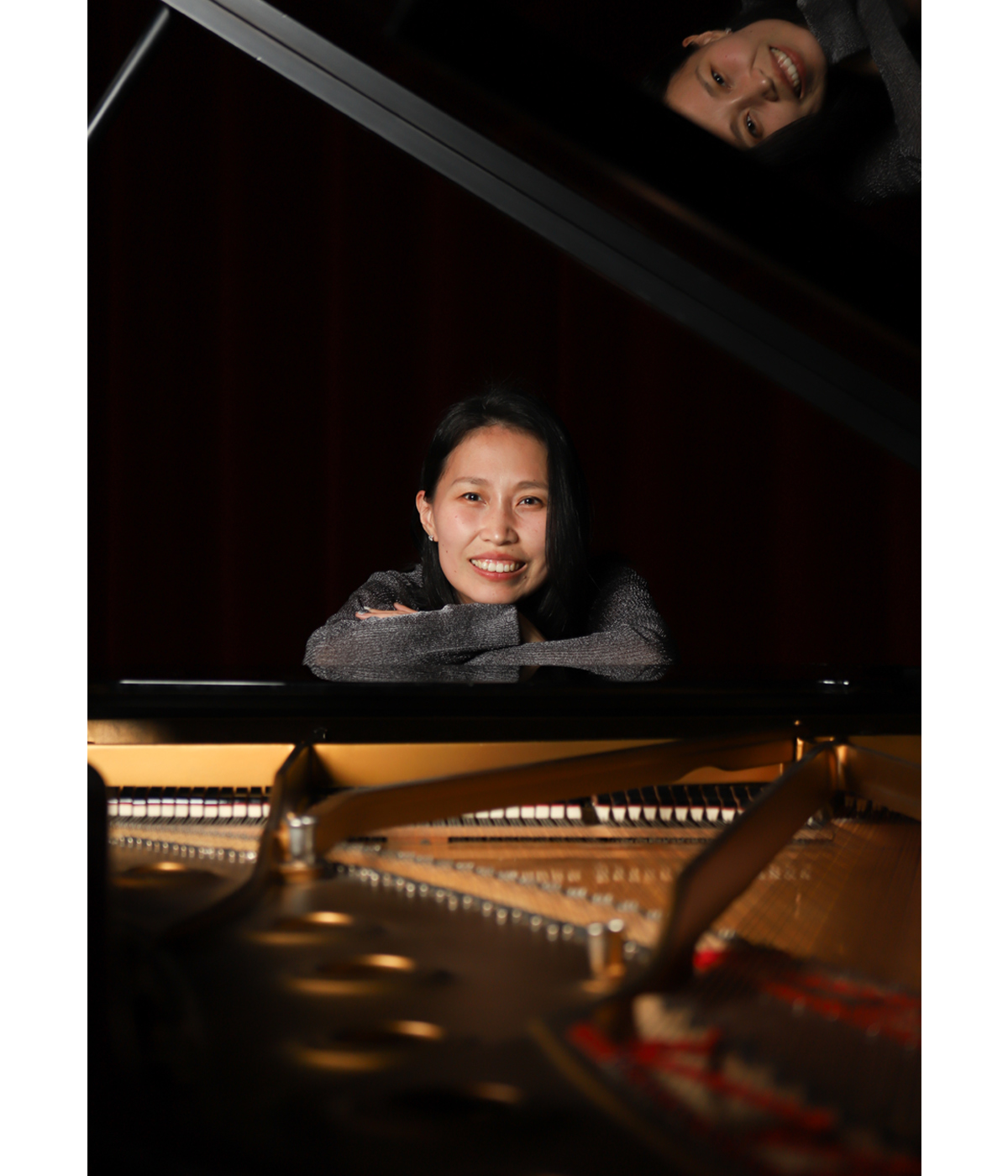
Ailing Zhao

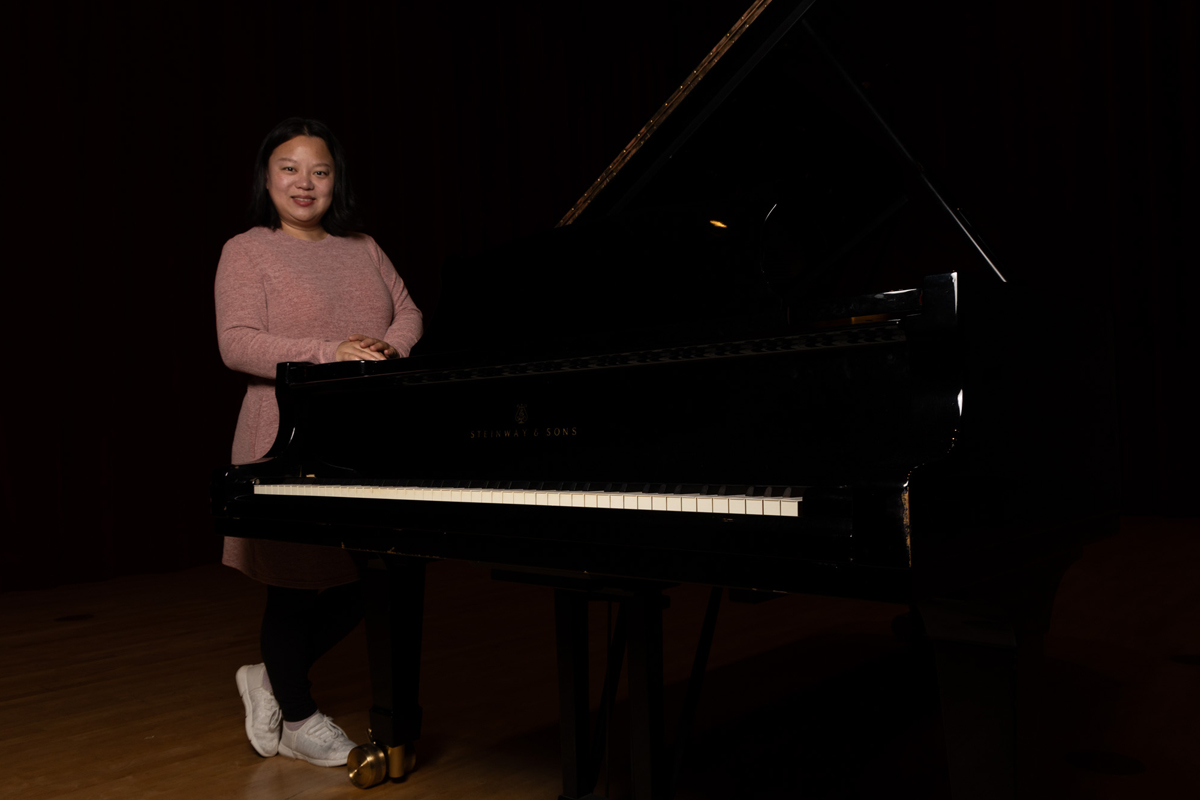
Photo by Michaela Mateo

Ailing Zhao is a fourth-year piano student in the School of Music. She has been a musician since she was 5 years old and is now a music teacher while working toward her B.A. at SF State. She has been teaching for 16 years — 10 years in China and six years in the U.S.

Ailing is a recipient of the William Corbett Jones Piano Scholarship. She hopes to become a college professor in the future. She recently gave birth to her first baby, and had to stop teaching for 5 months due to pregnancy complications. The scholarship enables Ailing to pay her tuition, buy books, and pay for child-related expenses so she can continue her studies.

Ailing says:

“Now I can focus more on my studies and have less pressure. Receiving this scholarship will allow me to continue chasing my dreams.”


Zheng (Audrey) Ma first became fascinated by the piano when she heard a neighbor playing when she was a child. Because she would stand outside and listen whenever the neighbor practiced, her mother spent all her savings to buy Audrey a piano of her own. “I am doing what I love every day because of my mother,” she says. “Even though she is no longer here, each time I play I feel like I am connecting with her.”

Audrey is a recipient of the Pone Scholarship. She hopes to pursue a professional piano teaching career, and says:

“This award provides me with the chance to develop skills that will benefit the music program at San Francisco State University and extend beyond it. I am deeply committed to my education and our Music program, and I am now one step closer to becoming a great pianist.”


Zheng (Audrey) Ma

Photo by Colin Flynn

For more information about donating to the College of Liberal & Creative Arts, contact:

Soo Kim

Senior Director of Development (Creative Arts)

College of Liberal & Creative Arts

soo.kim@sfsu.edu

(415) 338-7113

Read more about Soo